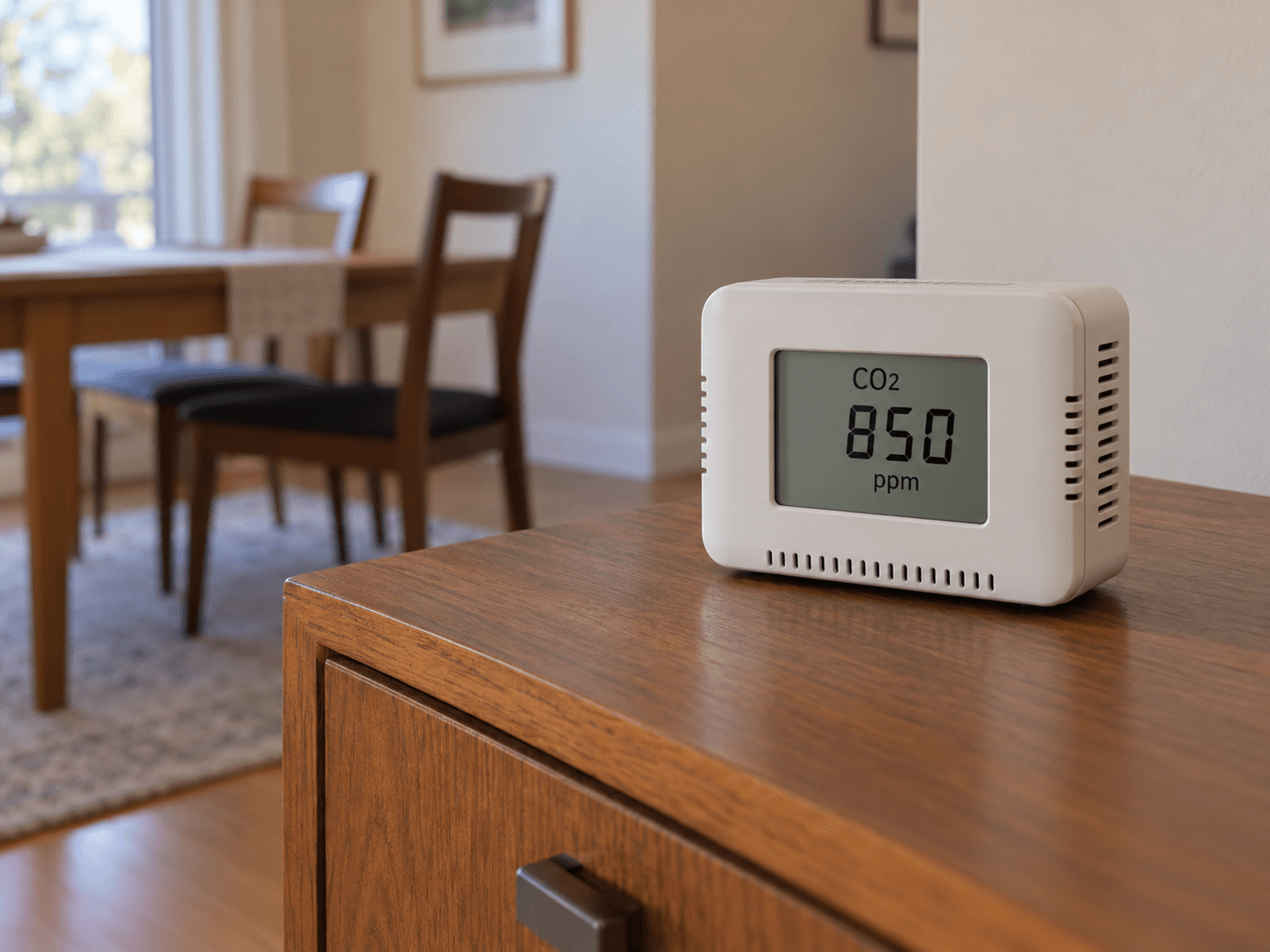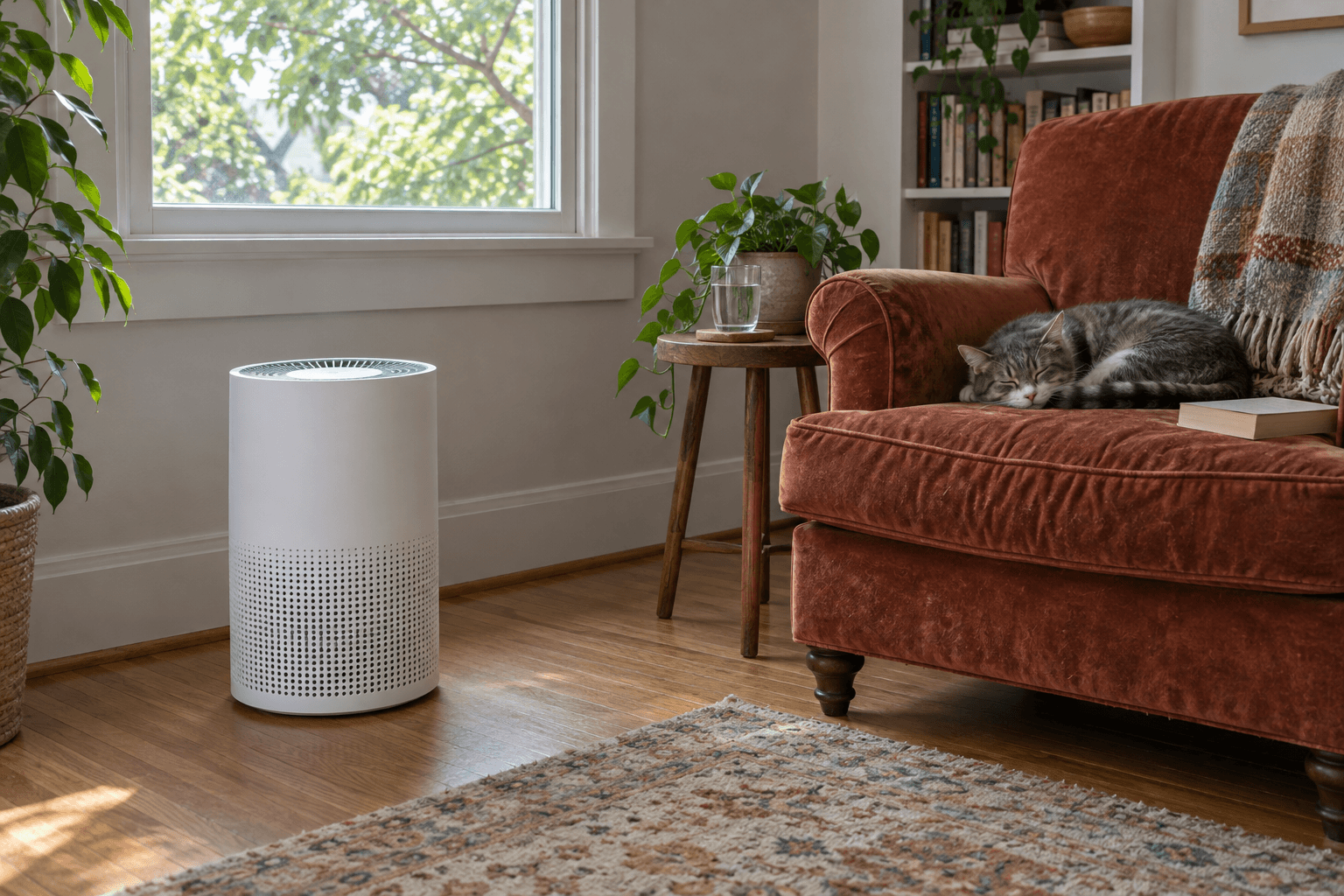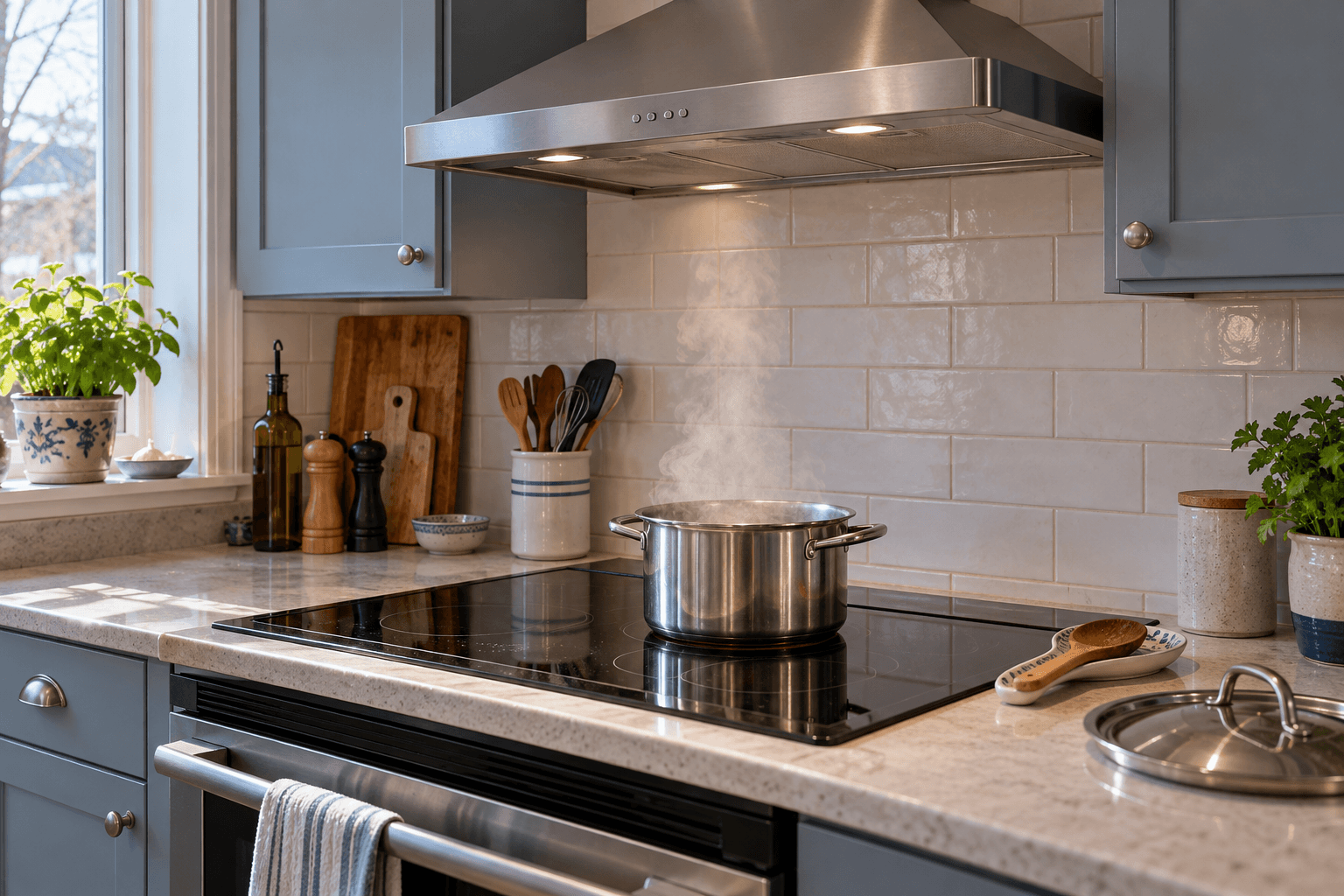
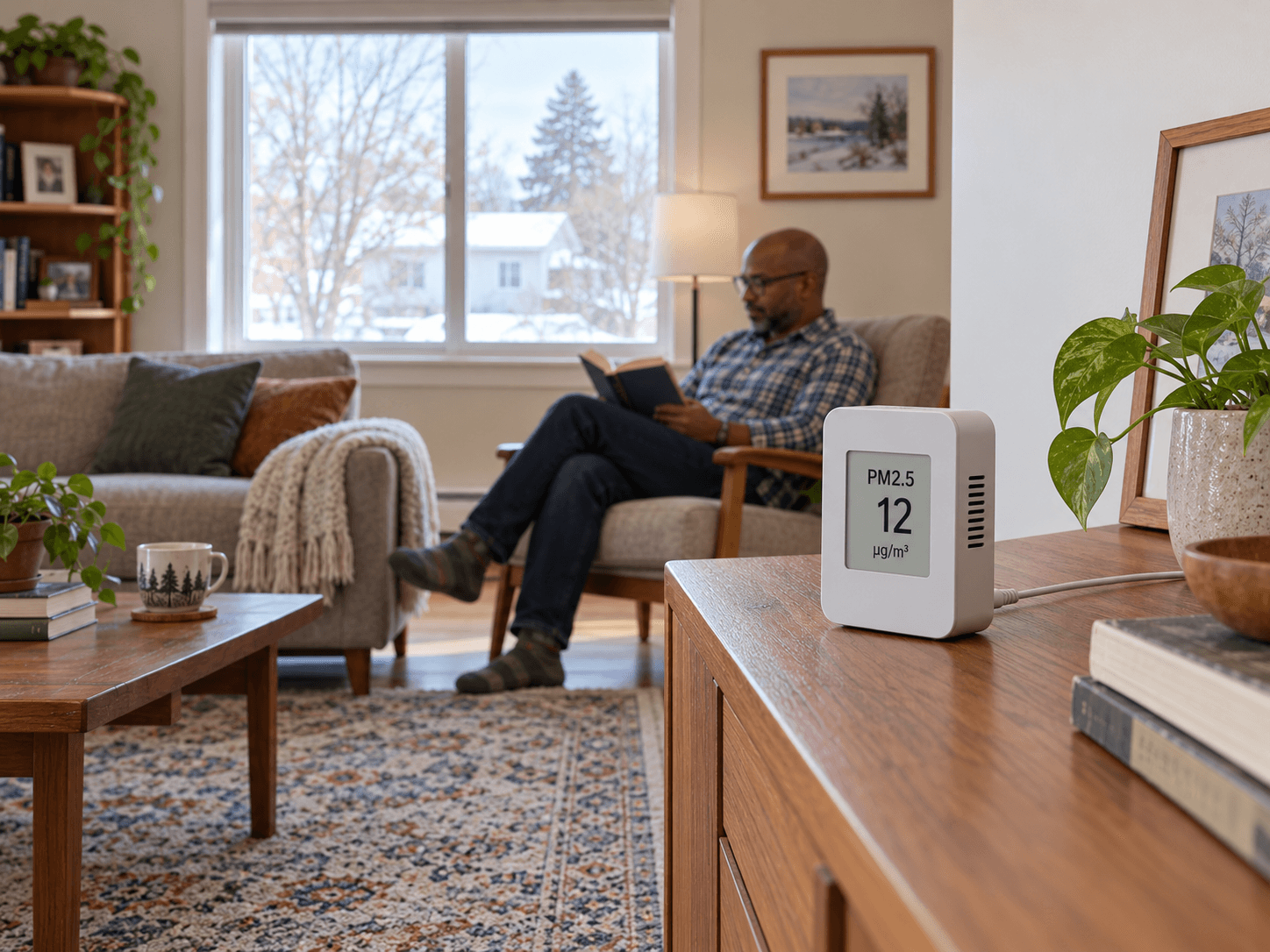
The monitor sits quietly at 8, climbs while dinner cooks, then falls again. That sequence can be useful. Before deciding what any one number means, check what the device measures, where it sits and how it produces the reading.
Start with the pollutant and the unit
PM2.5 refers to fine particles. A concentration shown in micrograms per cubic metre is different from a manufacturer's coloured air-quality score. Read the manual to find the averaging period, supported conditions and meaning of the displayed categories.
A particle sensor does not measure every gas in the room. Its reading cannot establish that carbon monoxide, radon or volatile organic compounds are absent. Keep certified smoke and CO alarms and appropriate radon testing separate from this everyday display.
The US EPA describes low-cost monitors as tools for information about specific pollutants, with accuracy and performance that vary. Treat a single consumer reading as an observation, not a laboratory result or a diagnosis.
Measure the air you actually want to understand
Source: US EPA: sensor placement
For a room trend, choose an open, stable location near the occupied part of the room, following the device instructions. Keep its sensing openings clear. A shelf beside the sofa answers a different question from a spot directly above the frying pan.
Avoid putting the monitor in a supply-air jet, against an open window or beside a humidifier. Fast temperature and humidity changes can affect some sensors. Record the location and leave it there while comparing ordinary activities.
Make one practical change at a time
Keep a short note: time, activity, outdoor smoke conditions, windows, exhaust fan and purifier setting. Look for recurring rises associated with cooking, burning candles or dust-producing work. Do not deliberately create smoke or dust to test the sensor.
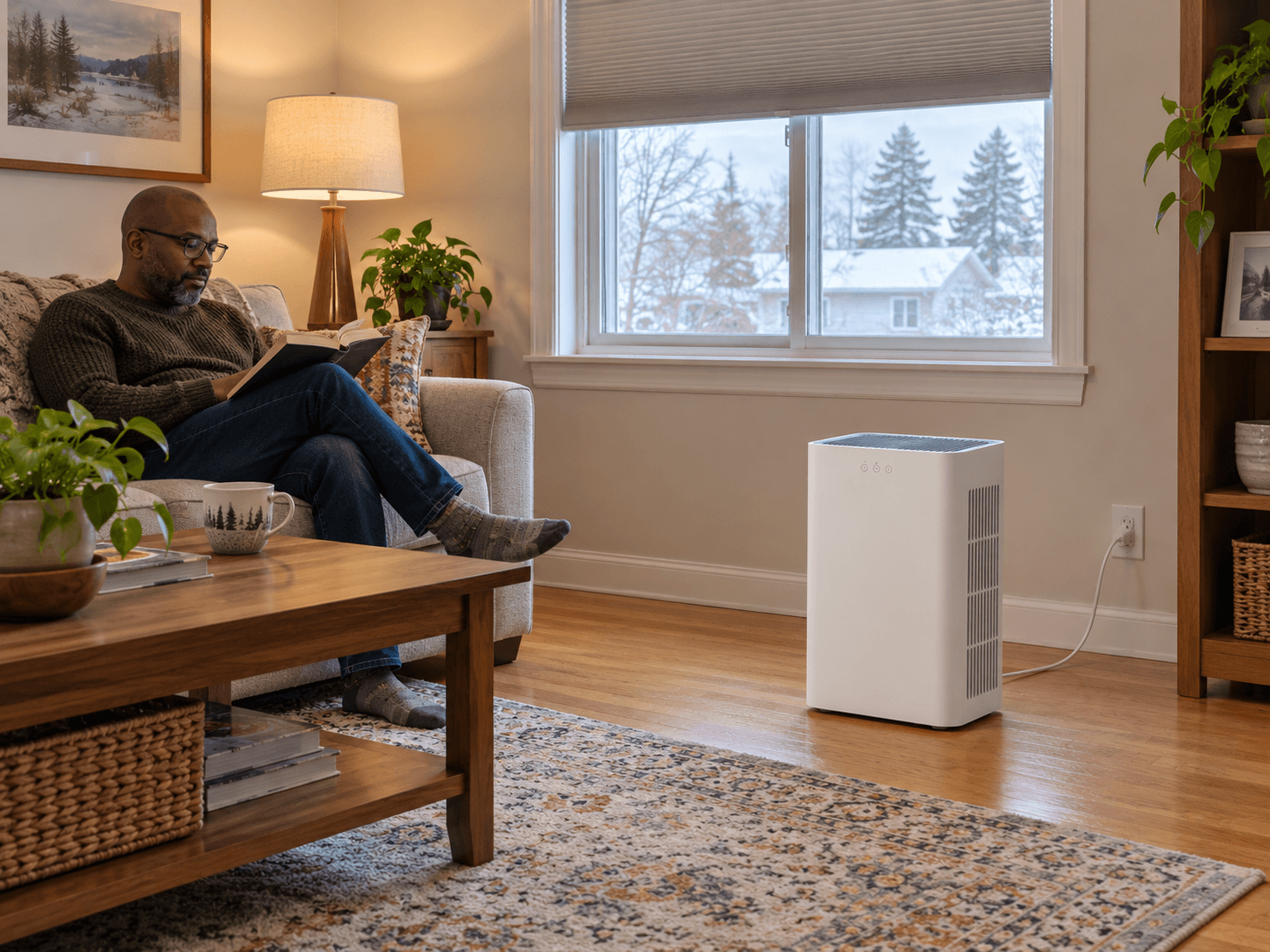
For example, compare your normal cooking routine with the same routine using the outside-venting range hood from the start. If readings repeatedly settle sooner, that is useful feedback for this setup. It does not establish a certified removal percentage.
Health Canada's fine-particle guidance favours reducing indoor sources and keeping concentrations as low as possible rather than treating a household number as a universal safe threshold. A low reading is no reason to ignore a known source.
If readings look implausible, check the manual's cleaning, calibration and placement advice before buying more equipment. Persistent concerns or symptoms deserve appropriate professional advice, even when a dashboard stays green.