Two ventilation units can look almost identical from the hallway and need different care inside. Before washing an HRV or ERV component, find the exact unit model and its owner instructions. A neighbour's successful cleaning method is useful only if it applies to the same part.
Match the manual to the cabinet
Read the model identification on the equipment, not just the name on the wall control. The same control family may operate several units. If the label is inaccessible or the model is unclear, send a photo to the manufacturer or service provider instead of guessing.
Separate the manual's routine owner maintenance from its installer and repair sections. Check how power must be isolated, how the door is supported and which parts may be removed. Follow any specified gloves or eye protection. A wall control showing Off is not a substitute for the manual's electrical isolation procedure.
Photograph the normal component positions before removal, once access is safe. Keep clips, retaining wires and orientation details together. If a part resists the described removal method, stop; brittle plastic and bent seals rarely improve after a stronger pull.
Read the instruction for each individual part
Source: Broan: HRV200/250 ECM and ERV200/250 ECM user guide, pages 5-7
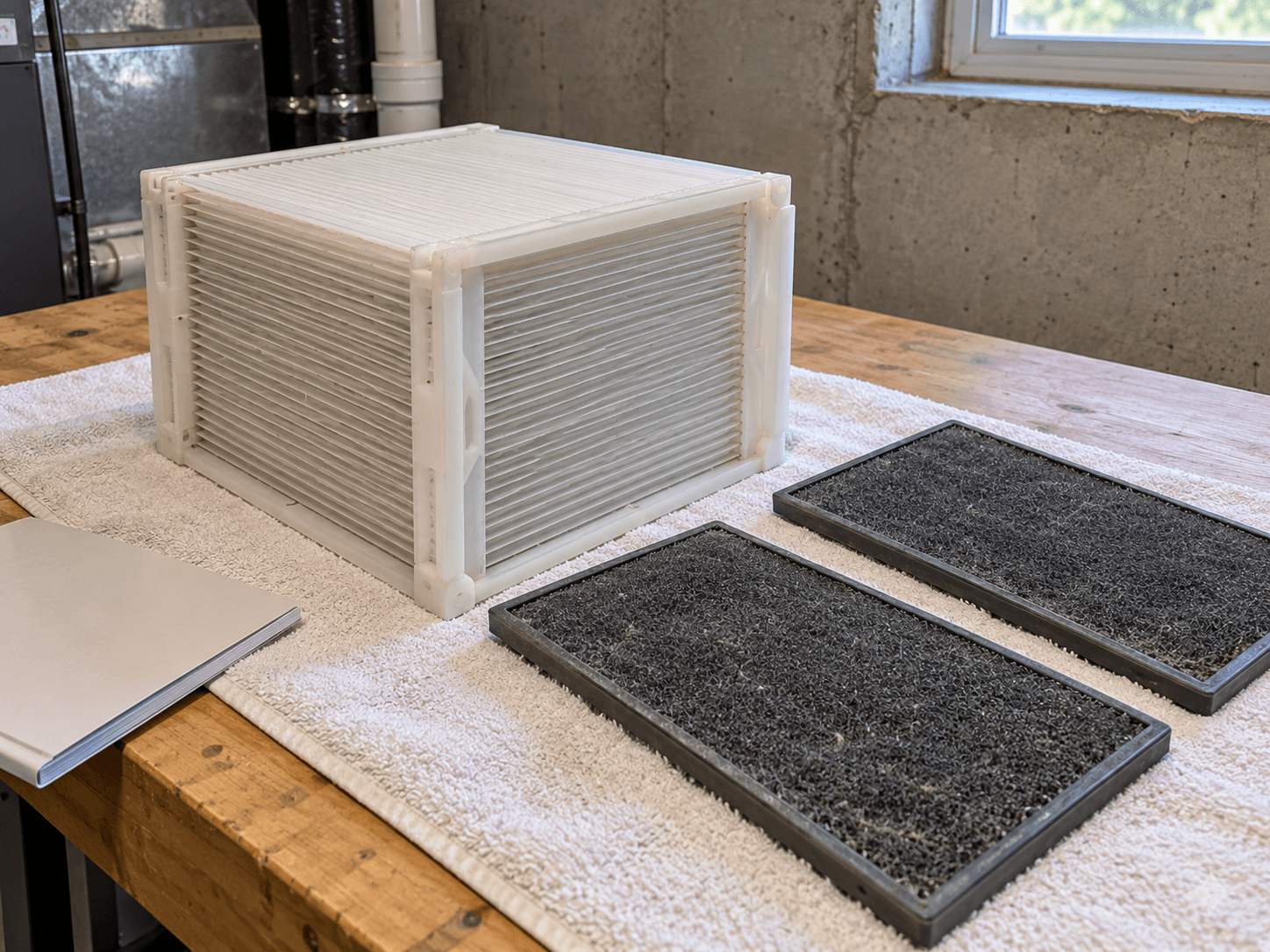
The filter catches debris before it reaches the recovery section. The core is the larger heat- or energy-transfer component. Their cleaning instructions can differ within one unit.
Broan's guide for its HRV200/250 ECM and ERV200/250 ECM models is a useful example: it permits washing the specified core filters, but gives different methods for the heat-recovery and energy-recovery cores. The listed ERV core must not be soaked; its instructions specify a vacuum with a soft brush attachment.
Use that distinction to find your own model's method, not as permission to wash every HRV core or vacuum every ERV core. Broan's support page begins by asking which model you own for good reason.
Reassemble, restart and record
Use only the permitted cleaning products and method. Let washable components dry as instructed before refitting them. Do not add fragrance, disinfectant, compressed air or a pressure washer unless the manufacturer specifically directs it.
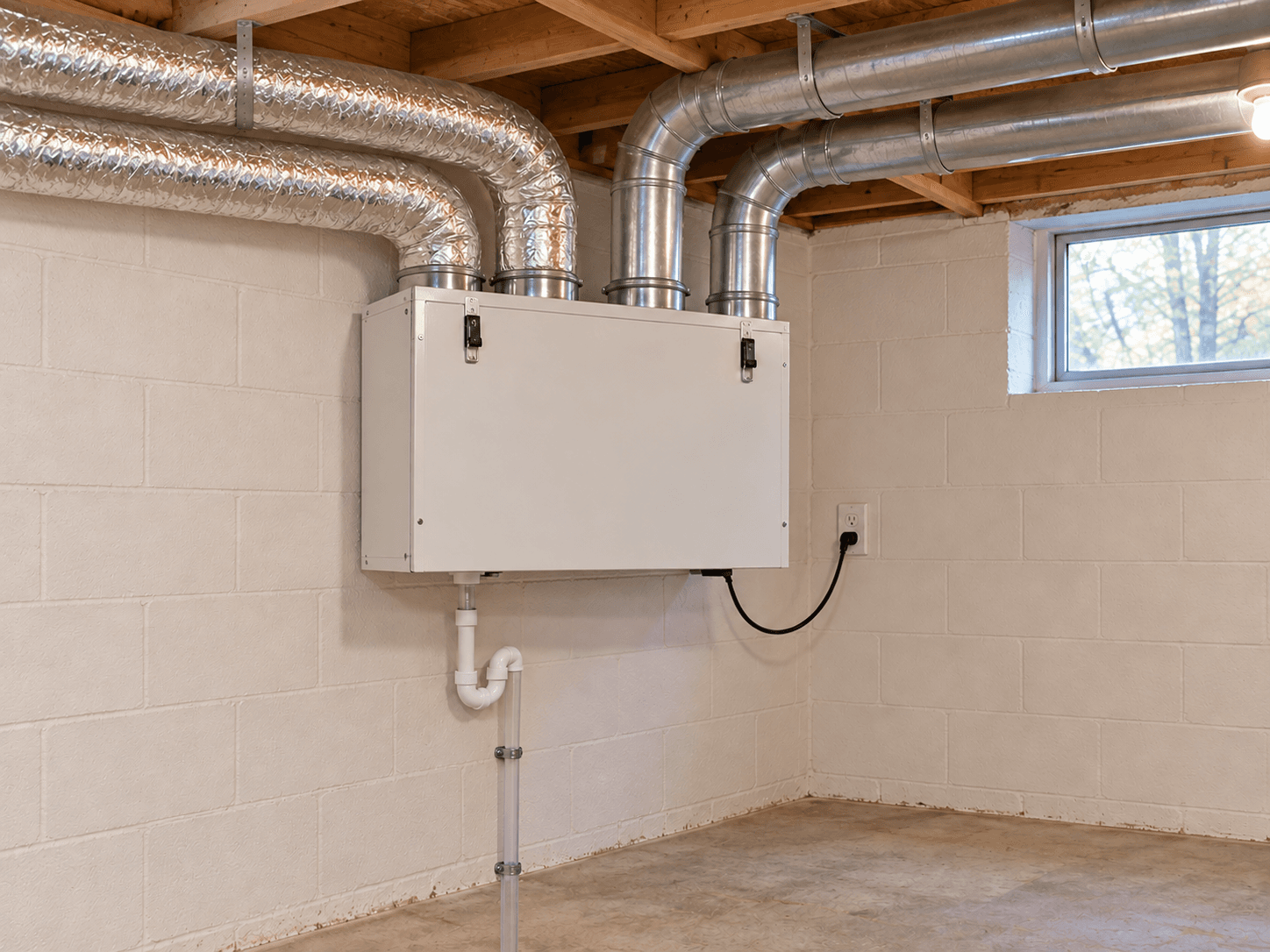
Reinstall all required filters, supports and seals, close the door properly, then restore power in the specified sequence. Reset a maintenance reminder only after the work is complete. Listen for an unfamiliar noise and look for a fault indication.
Record the date and any damage, persistent odour, water or poor fit. A damaged core or seal needs the manufacturer's advice; it is not a reason to run the unit with the component omitted. Repeated faults or inaccessible cleaning work belong with service personnel.
Leave the manual link and replacement-filter reference with the household maintenance record. The next cleaning should begin with the right instructions already found.