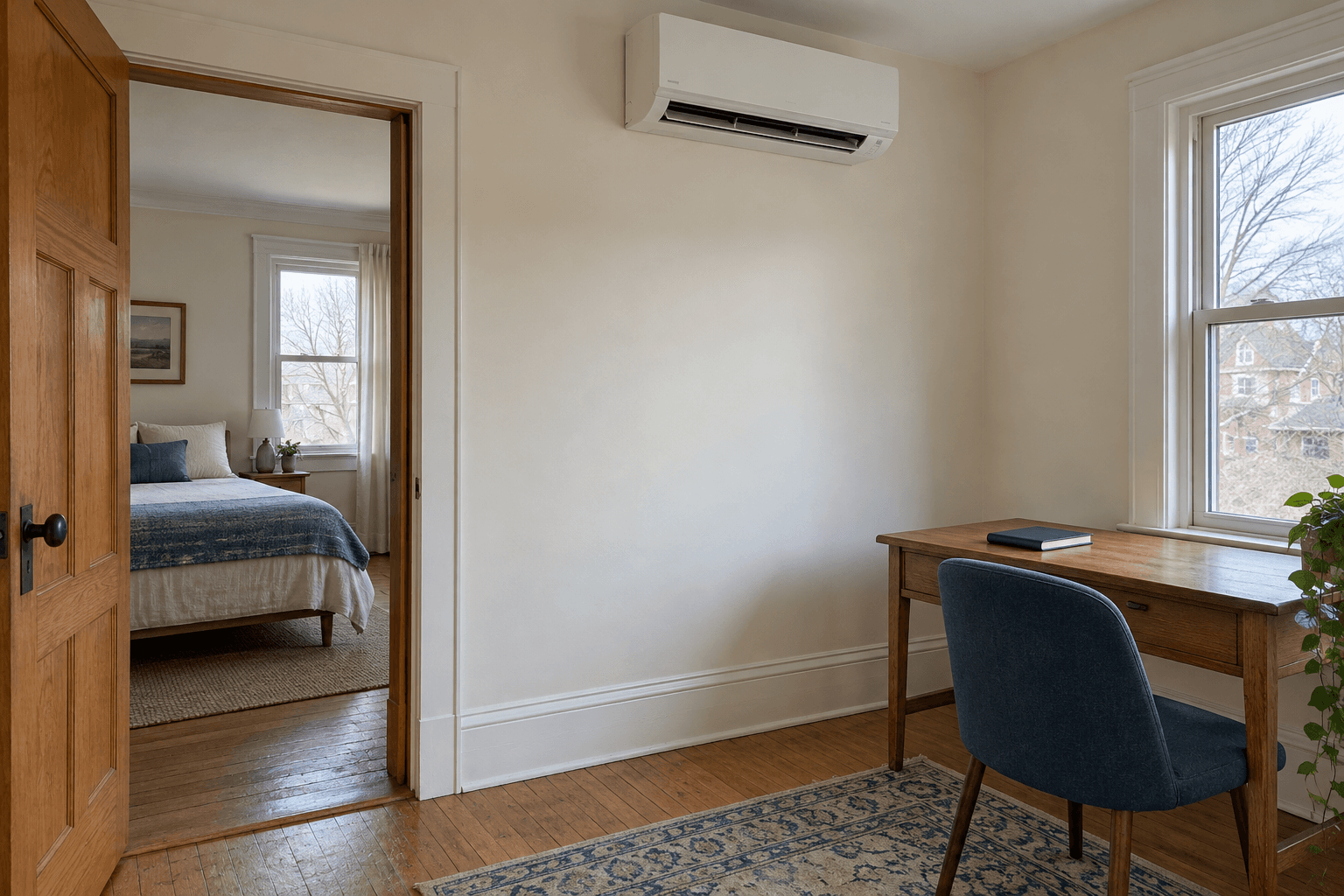
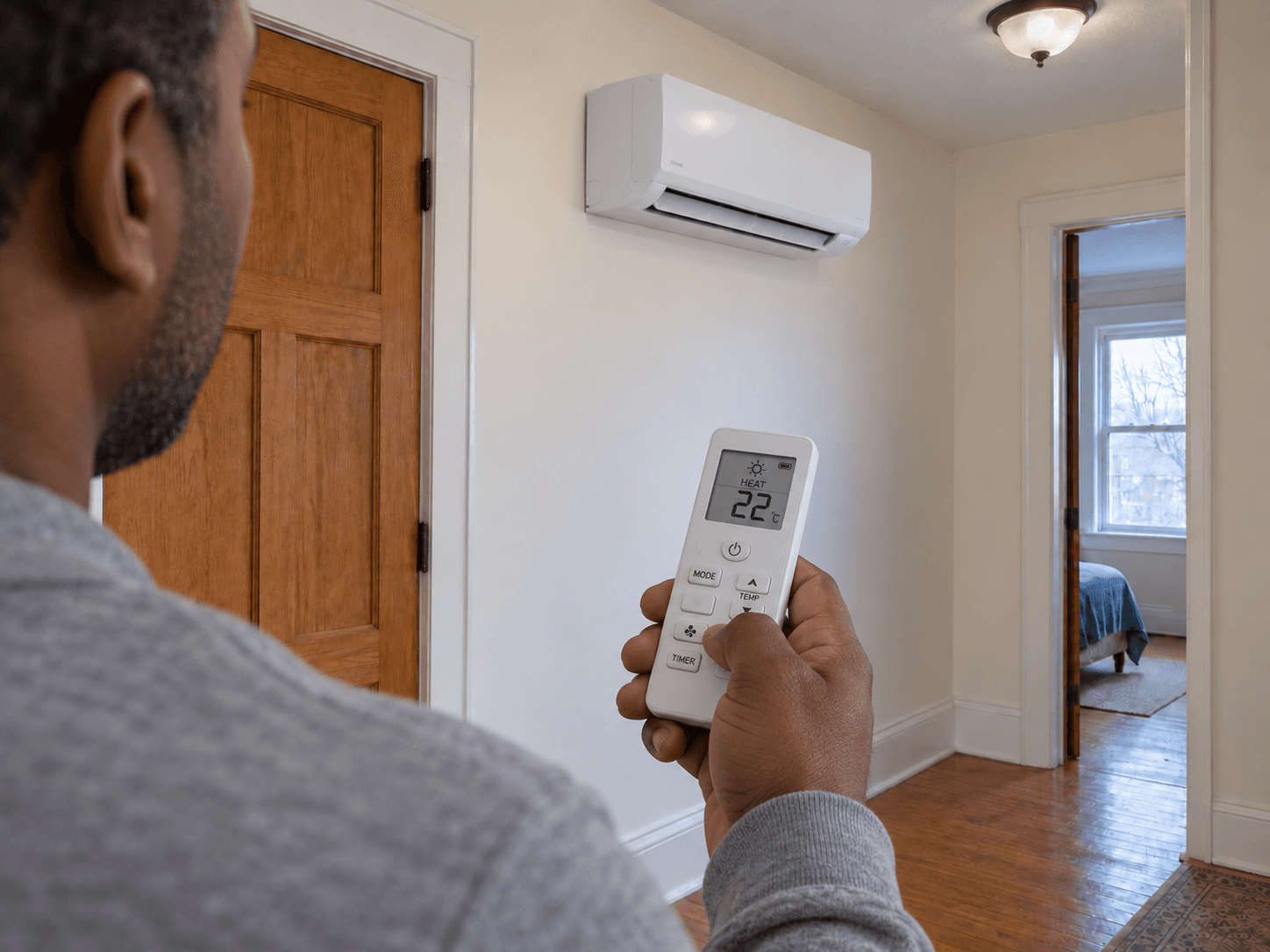
I switched the bedroom head to Heat and waited for the familiar fan noise. It stayed quiet. I pressed the button again, which gave me another setting to check and no better understanding of the first one.
The owner's guide was more helpful than my second press. I needed to know what the system was doing before deciding that silence meant failure.
Warm-up and defrost serve different purposes
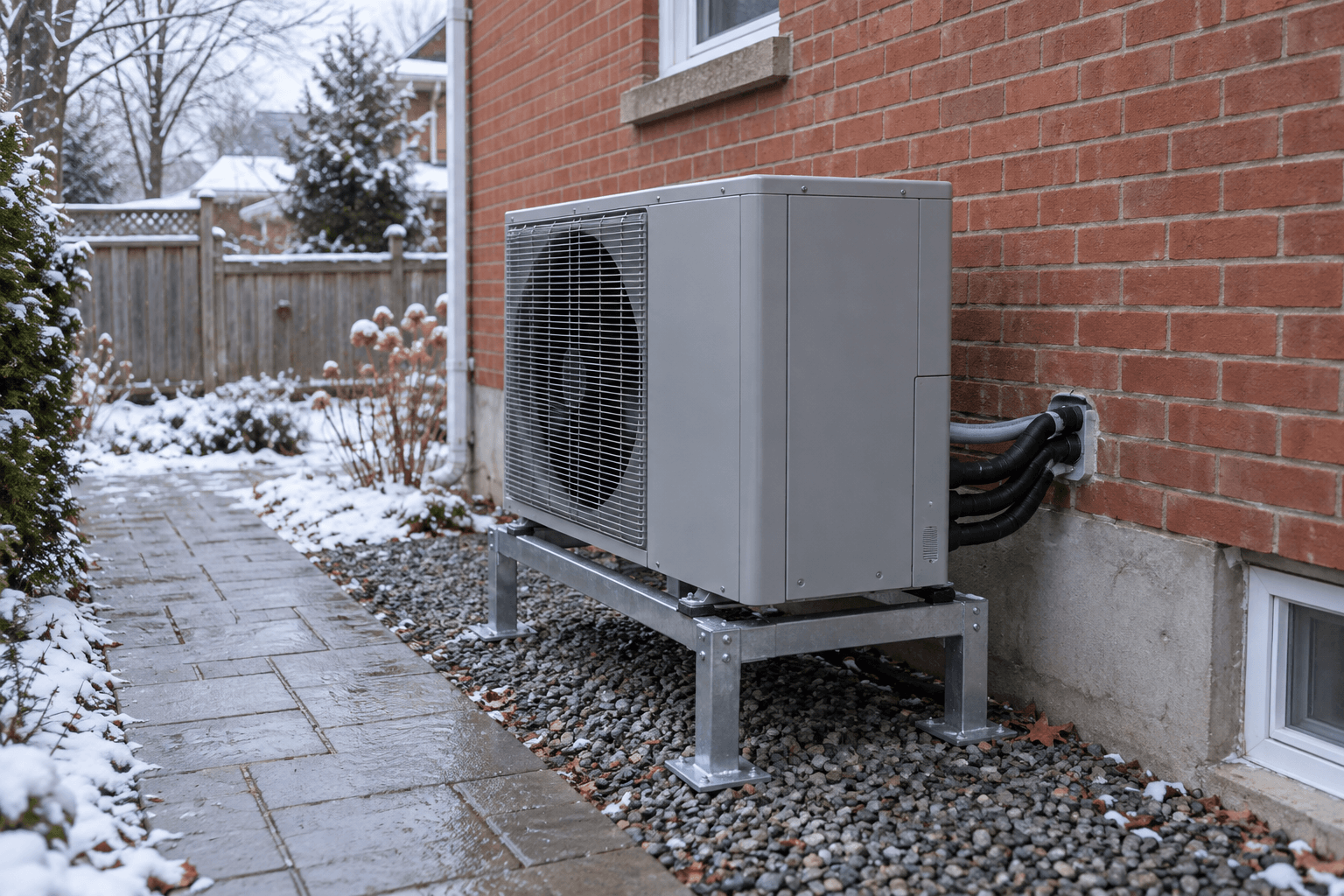
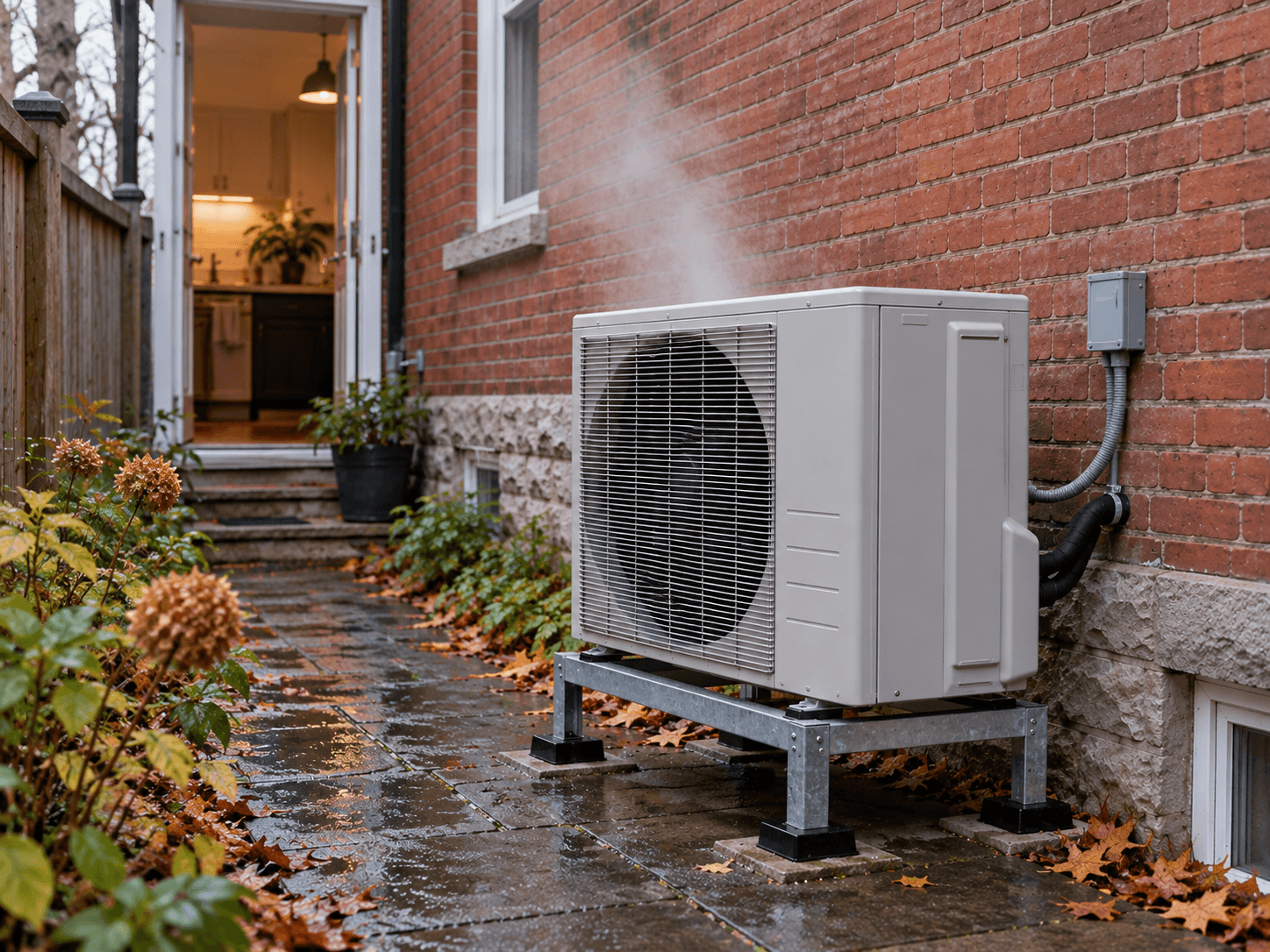
Some indoor units delay or reduce airflow while the coil warms, so they do not immediately blow cold air into the room. Later in a heating run, outdoor defrost can also interrupt indoor heating. The model's indication and sequence matter.
Mitsubishi Electric describes indoor fan stoppage during defrost, with the exact display depending on the equipment. Its Canadian MSZ-GS18NA instructions also describe temporary protection delays. These are examples to compare with the installed system, not one timer for every mini-split.
Record what happens before and after the pause
Source: Mitsubishi Electric Canada: heating pauses and protection
I left the normal setting alone long enough to follow the sequence described in our guide. I noted the operating mode, room temperature, indicator lights and whether warm airflow returned. The time and weather were more useful than 'it stopped again'.
Repeatedly switching power or changing modes can start a new protection delay and make the sequence harder to follow. A persistent error should be recorded for service, not cleared over and over.
- Confirm the controller is in the intended heating mode.
- Check the manual's description of the displayed indication.
- Note whether other heads connected to the outdoor unit are asking for a conflicting mode.
- Observe whether normal heating returns and the room moves toward its setting.
A normal pause should return to useful operation
Source: Carrier Canada: persistent heating and icing problems
Arrange service if heating does not return as expected, errors recur, the home keeps losing temperature or outdoor ice persists. Carrier's troubleshooting guidance separates ordinary checks from refrigerant, fan and defrost faults that need a technician.
Keep clear of moving parts and leave panels closed. Actual smoke, flames or a burning electrical smell calls for an immediate safety response, not a longer wait for defrost. Get to safety and call emergency services for a fire.
Our next observation began with fewer button presses. I could tell the installer what the controller showed and what happened next. That was a better starting point than my first diagnosis, which had been based entirely on the absence of a noise.