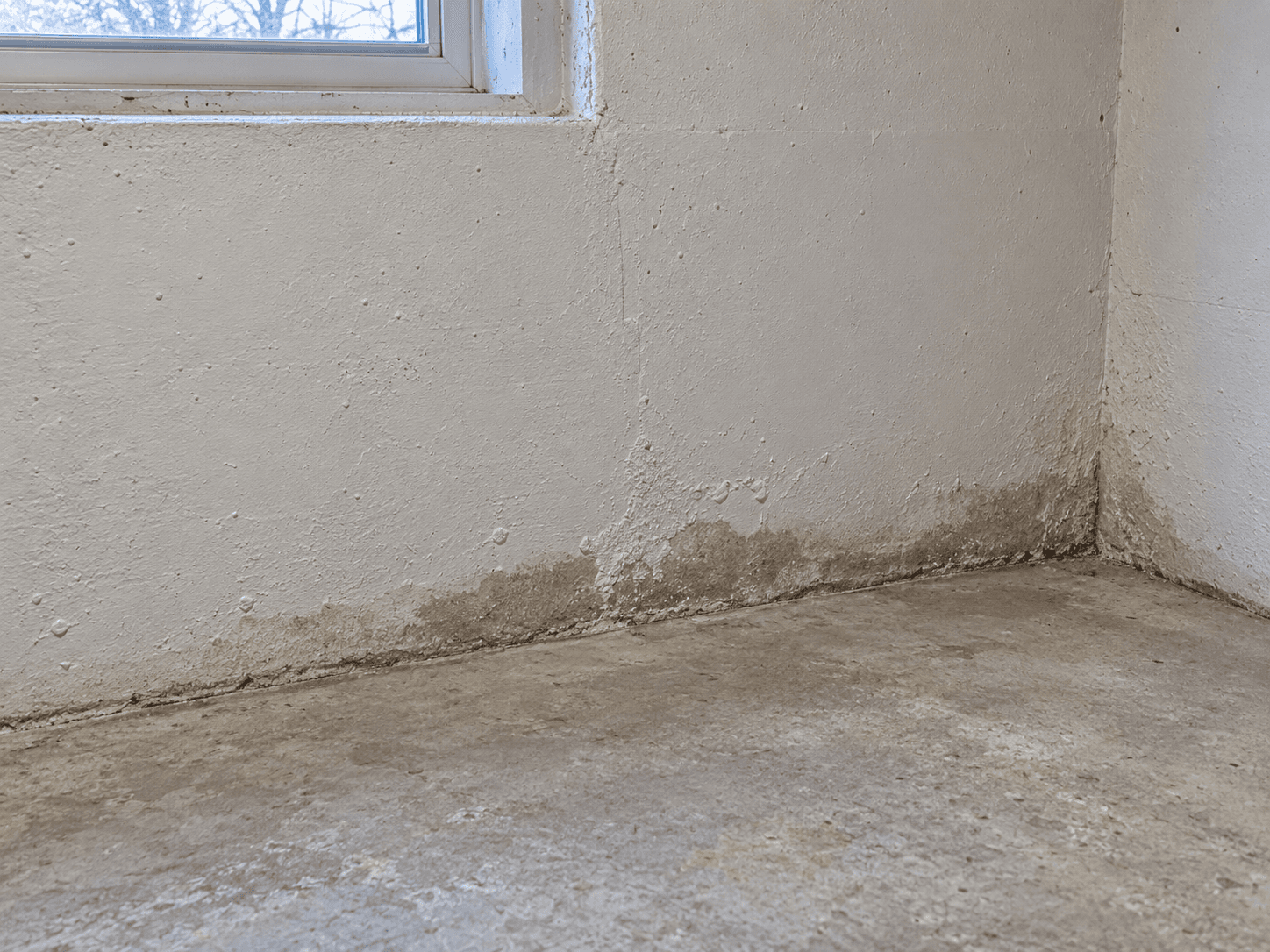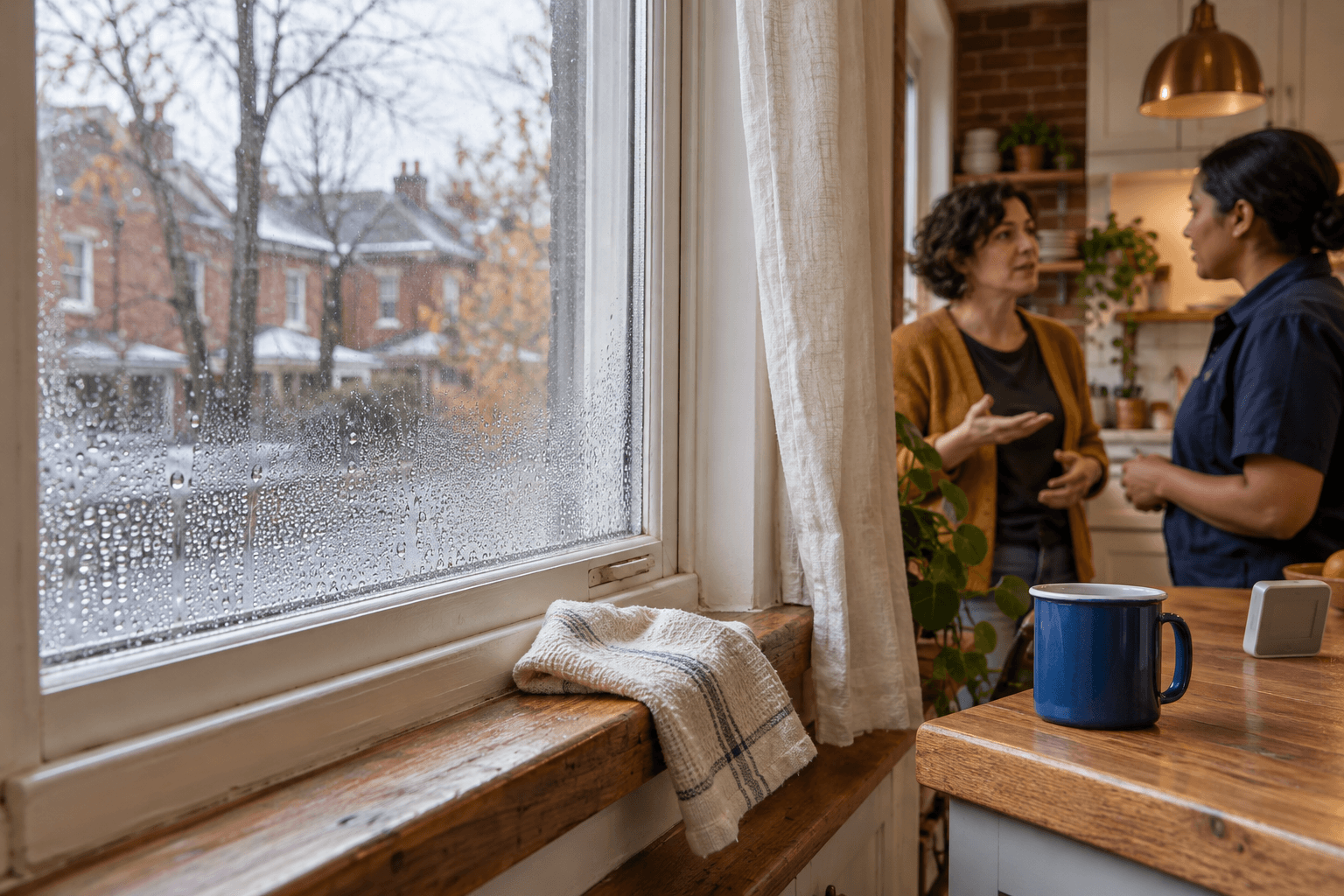
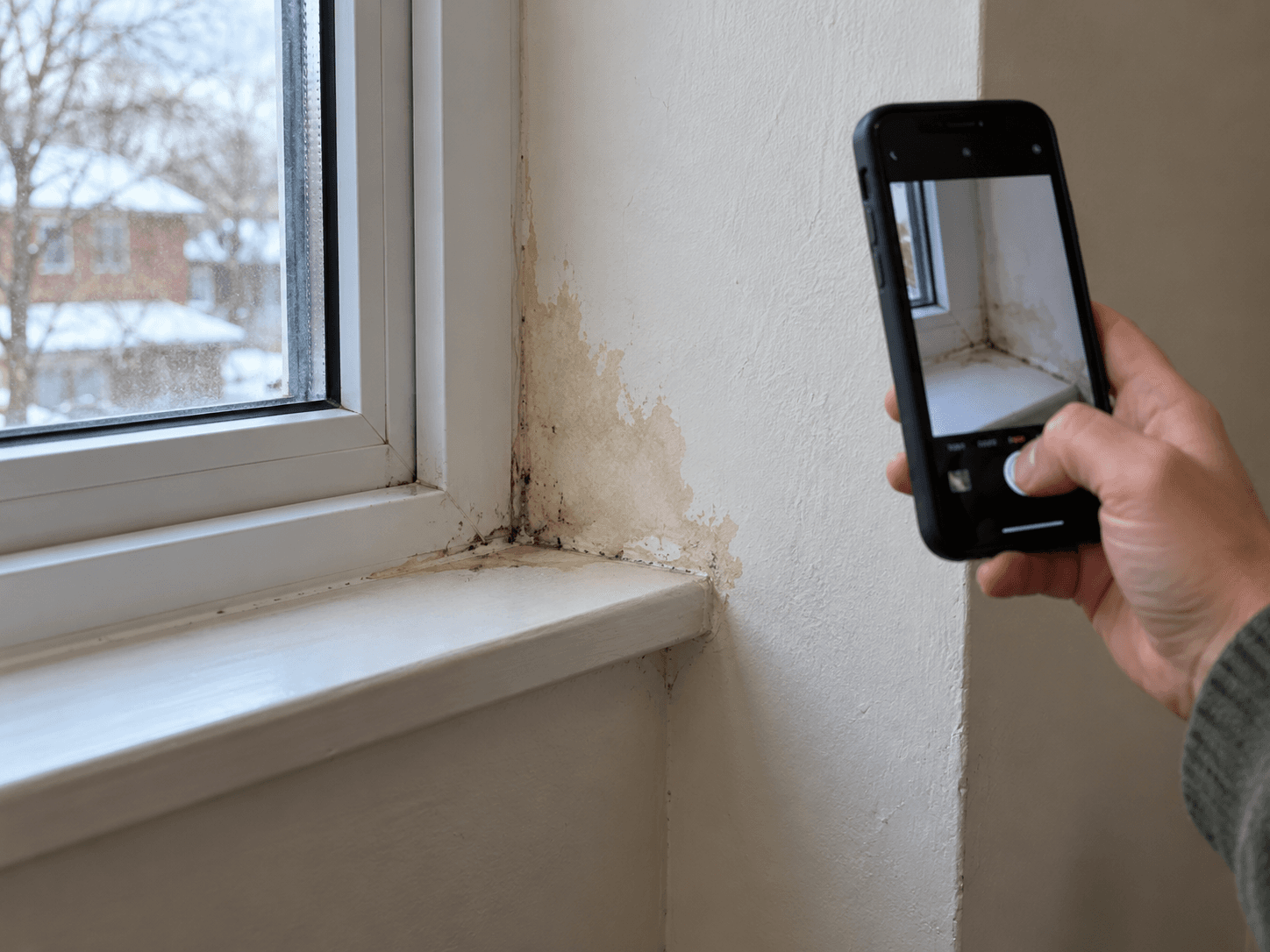
There is a visible patch beside the window, and someone offers a test to find out whether the room contains mould spores. Before paying, ask what the result will change. The damp surface and the reason it became wet already need attention.
Find the moisture and the affected material
Health Canada generally does not recommend air testing for mould. Results do not predict health effects and often say little about the source of damage. Visible growth should be addressed along with the underlying moisture problem.
Begin with the history: when the mark appeared, whether a leak or flood occurred, whether it returns after cleaning and whether other rooms have similar signs. Record locations and dates with photographs without scraping or disturbing suspect material.
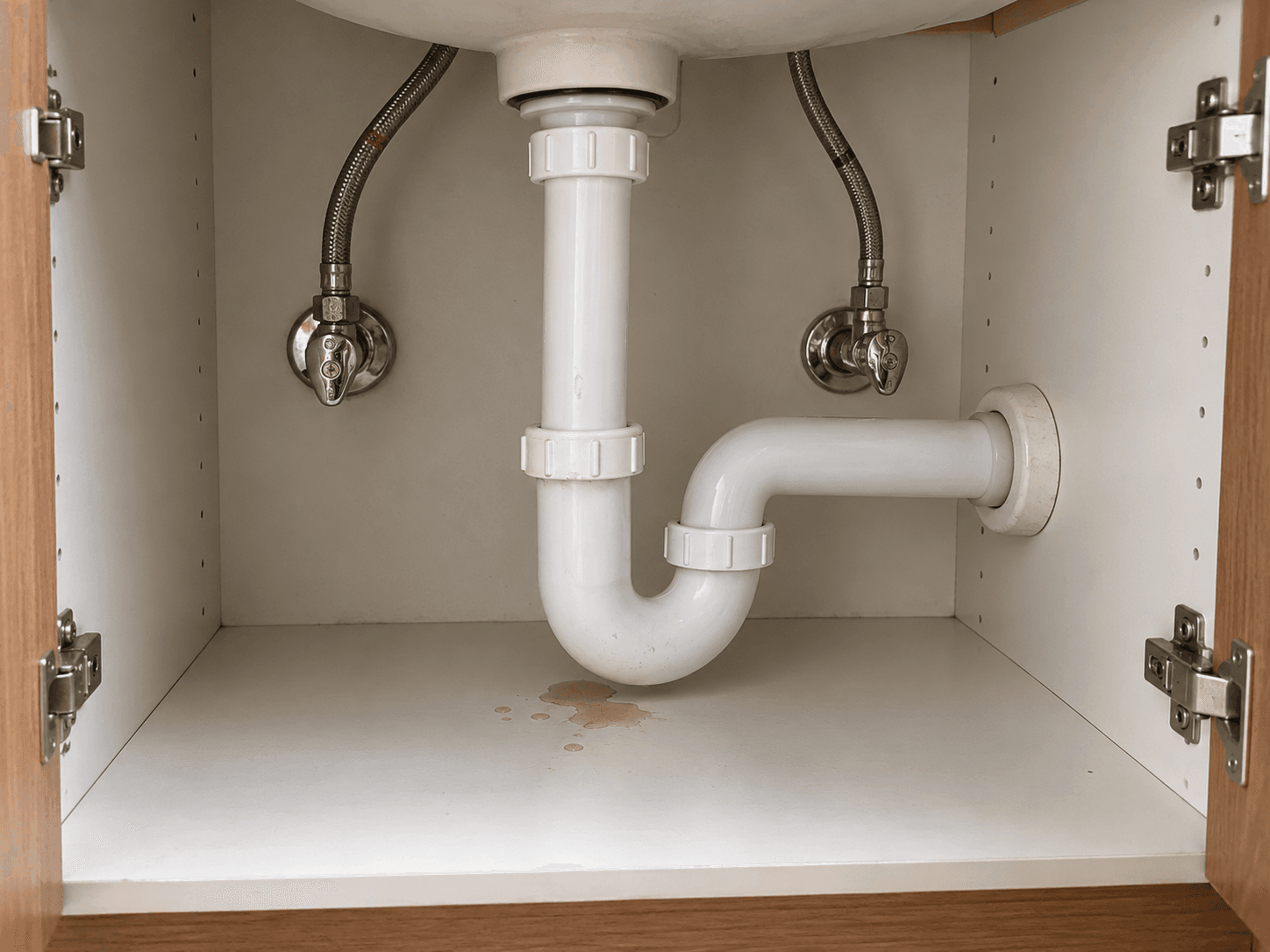
A mark near a window does not automatically mean the whole home needs more ventilation. A leak, cold surface, damaged seal or another local condition may be involved. An assessor should explain the evidence for the proposed cause.
Seek qualified help for extensive or recurring growth, suspected hidden damage, contaminated floodwater or unclear moisture sources. Health Canada provides separate cleanup guidance; opening walls or disturbing damaged materials is not a useful first experiment.
Give every proposed sample a purpose
Source: Health Canada: interpreting indoor-air investigations
Airborne spore levels vary, and finding spores does not by itself establish the extent of a building problem. A report needs interpretation in the context of an inspection and moisture history.
Health Canada's residential guidance allows that a qualified professional may recommend a specific non-culture air test when concerns remain unexplained after inspection, particularly where hidden damage is suspected. That is different from buying a generic pass-or-fail air package before looking at the building.
Ask the assessor which question the sample answers, where it will be taken, how it will be interpreted and what action each possible result would lead to. Ask whether the same decision can be made from inspection or moisture evidence.
Ask for a plan you can act on
A useful written scope identifies the areas to investigate, likely moisture pathways, any limits to access and the next steps if concealed damage is found. It should explain the proposed repair and cleanup approach, not just present a laboratory table.
Agree on how the work will be checked afterwards. That may include confirming the moisture source is corrected, affected materials are dealt with and the area is appropriately clean and dry. Complex work may warrant independent review.
Discuss health symptoms with a healthcare professional. A building inspection helps identify and correct the property problem; an air-test number should not be used to diagnose a person.