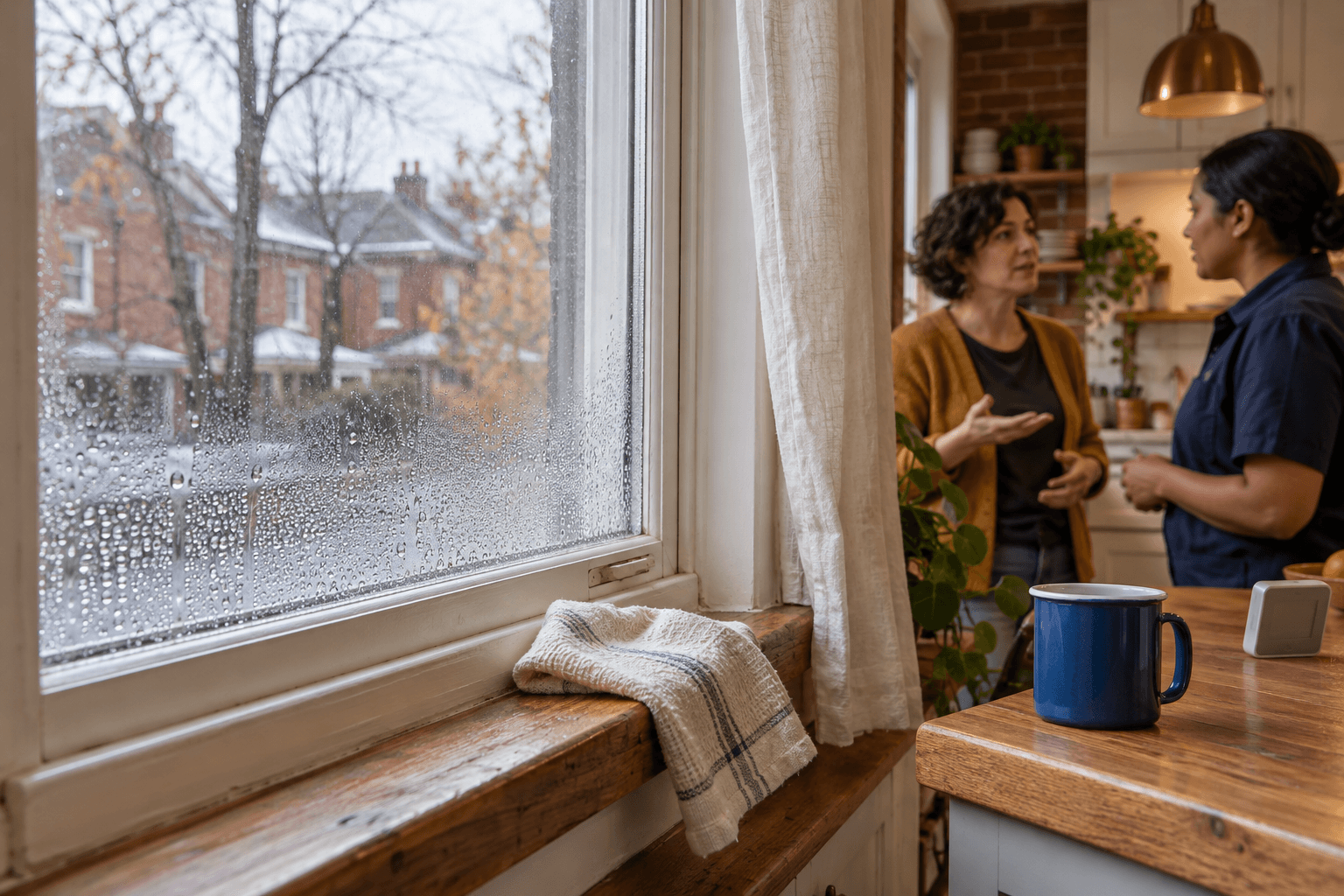
The room felt stuffy, and my first instinct was to open a window. Then I checked the advisory. Outside air was carrying wildfire smoke, so the usual response needed a little more thought.
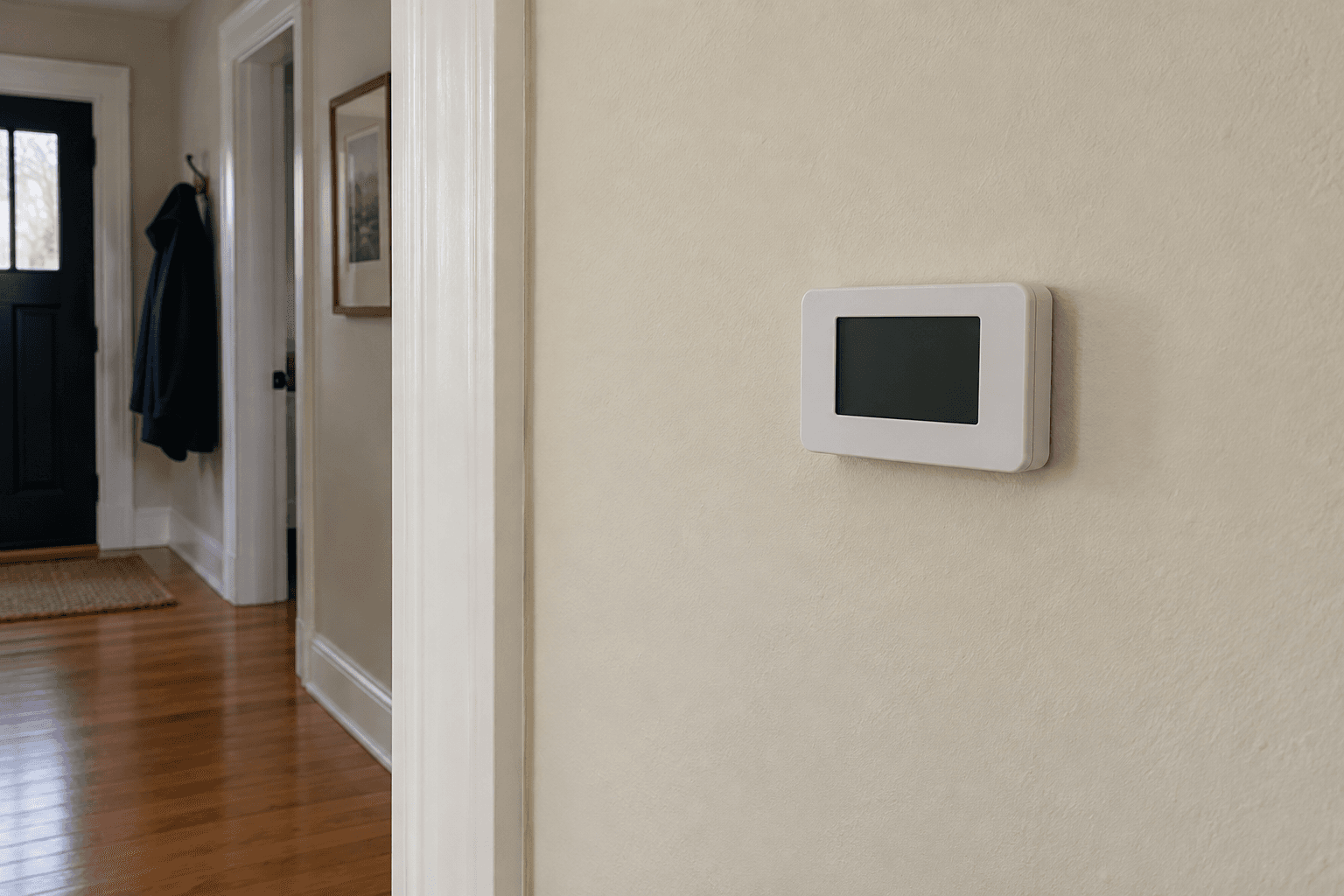
We already had a plan for our equipment. That was fortunate, because the wall control offered several fan modes whose names were not especially helpful under pressure.
Know which system brings air inside
Source: Health Canada: protecting yourself during wildfire smoke
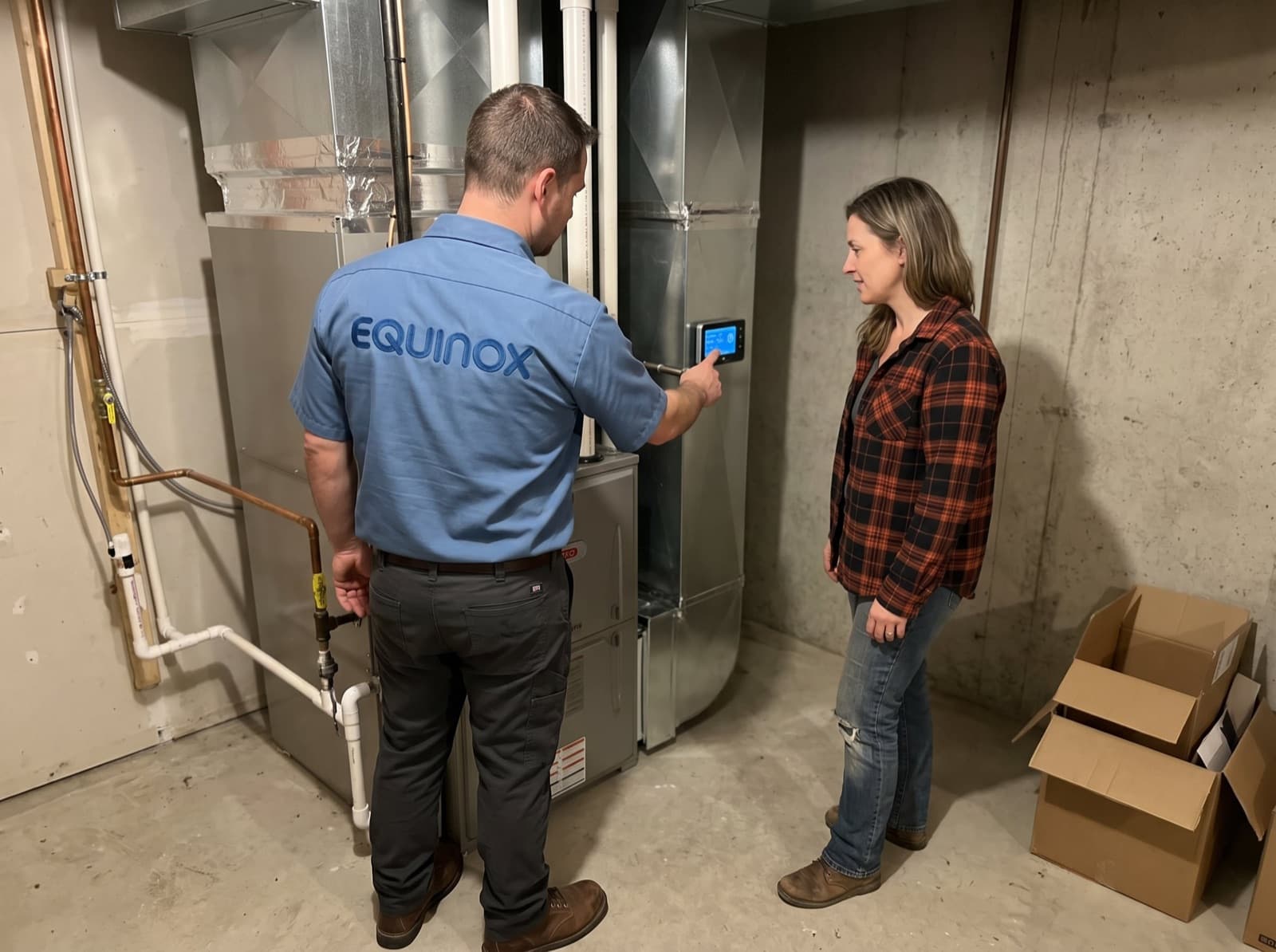
Central recirculation and an outdoor-air ventilator do different jobs. A furnace fan setting does not tell you what a separate HRV, ERV or fresh-air damper is doing. Check the actual equipment instructions and have its smoke-event operation explained before changing unfamiliar settings.
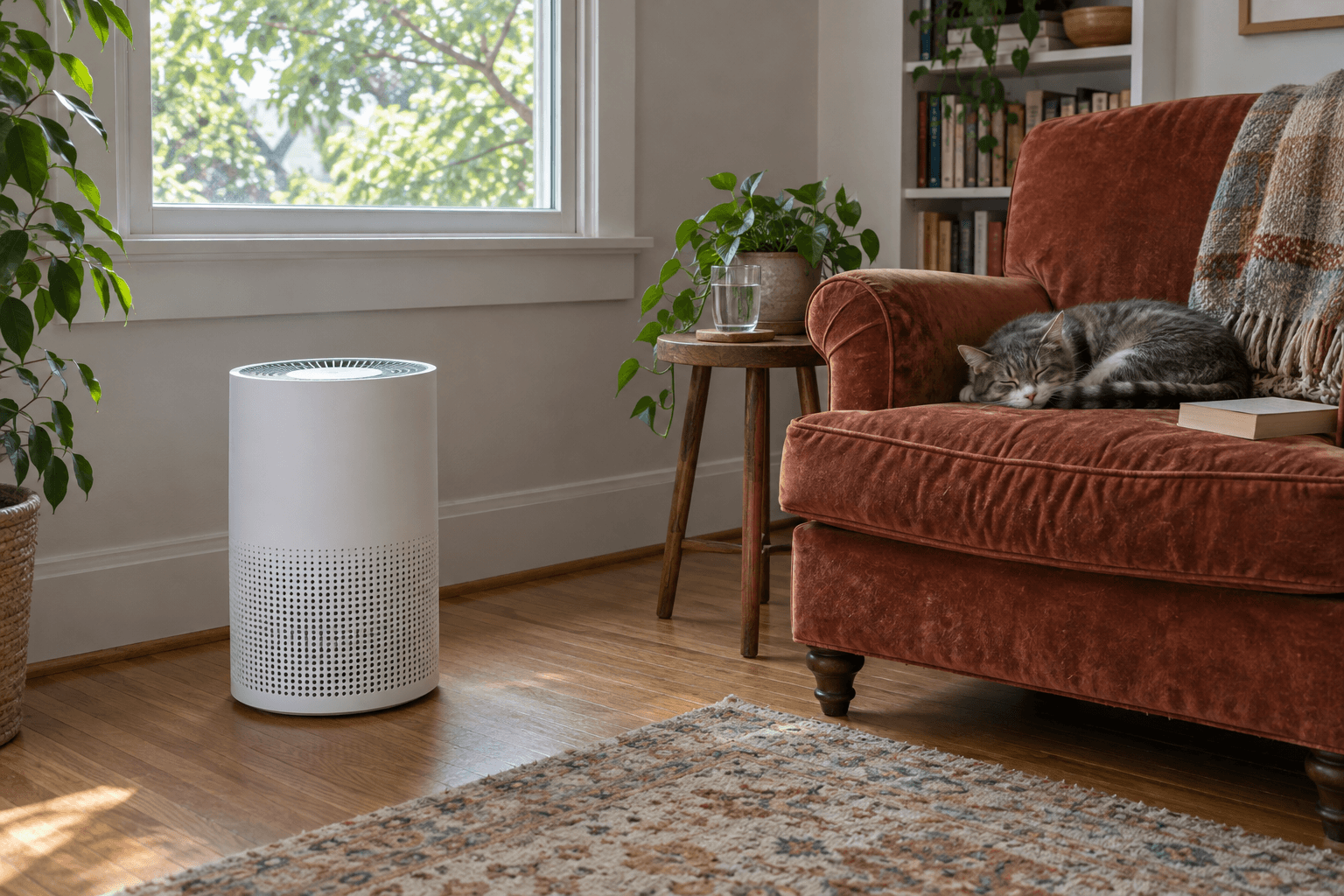
Health Canada's smoke guidance recommends keeping windows and doors closed as much as possible, using suitable filtration and limiting unnecessary exhaust fan use. It also emphasizes staying cool. We followed local advice and our equipment's instructions while reducing avoidable indoor particle sources.
We did not block combustion-air openings, disable alarms or improvise duct covers. If the setup was unclear, we would ask the equipment professional rather than guess which grille to close.
Reassess as conditions change
Source: Health Canada: residential carbon dioxide guidelines
Health Canada's carbon dioxide guidance recognizes that outdoor pollution can change the balance between more ventilation and limiting polluted air intake. A rising CO2 reading is useful context; it is not an instruction to ignore a smoke advisory.
We checked current outdoor conditions and indoor comfort during the day. When outdoor air improved, we resumed appropriate ventilation. If the house became too hot or smoky to use comfortably, our next step was a suitable local cleaner-air or cooling space.
The useful habit was checking conditions before opening the window. On most days that takes seconds. On a smoke day it changes what we ask the home's ventilation to do.