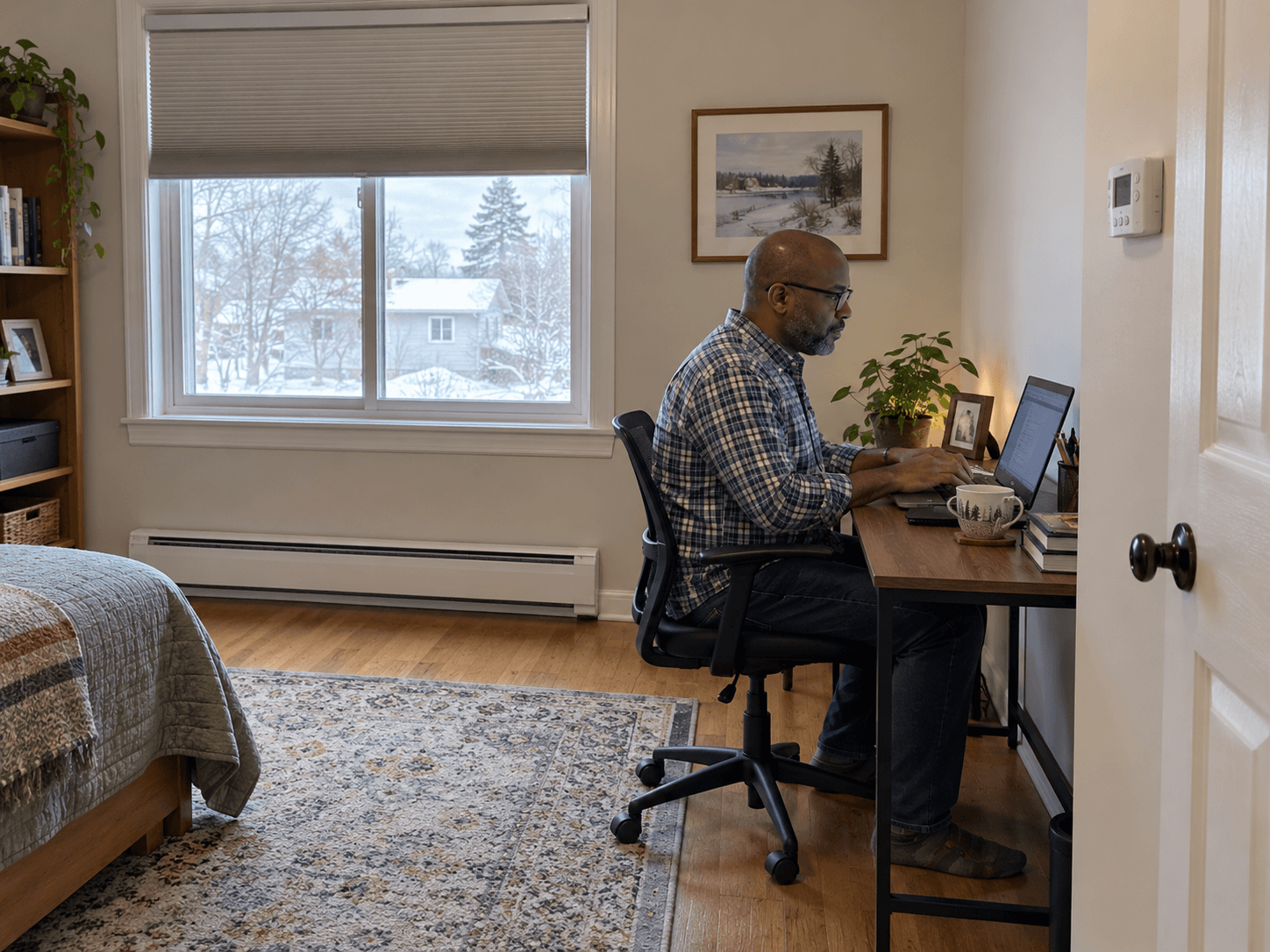
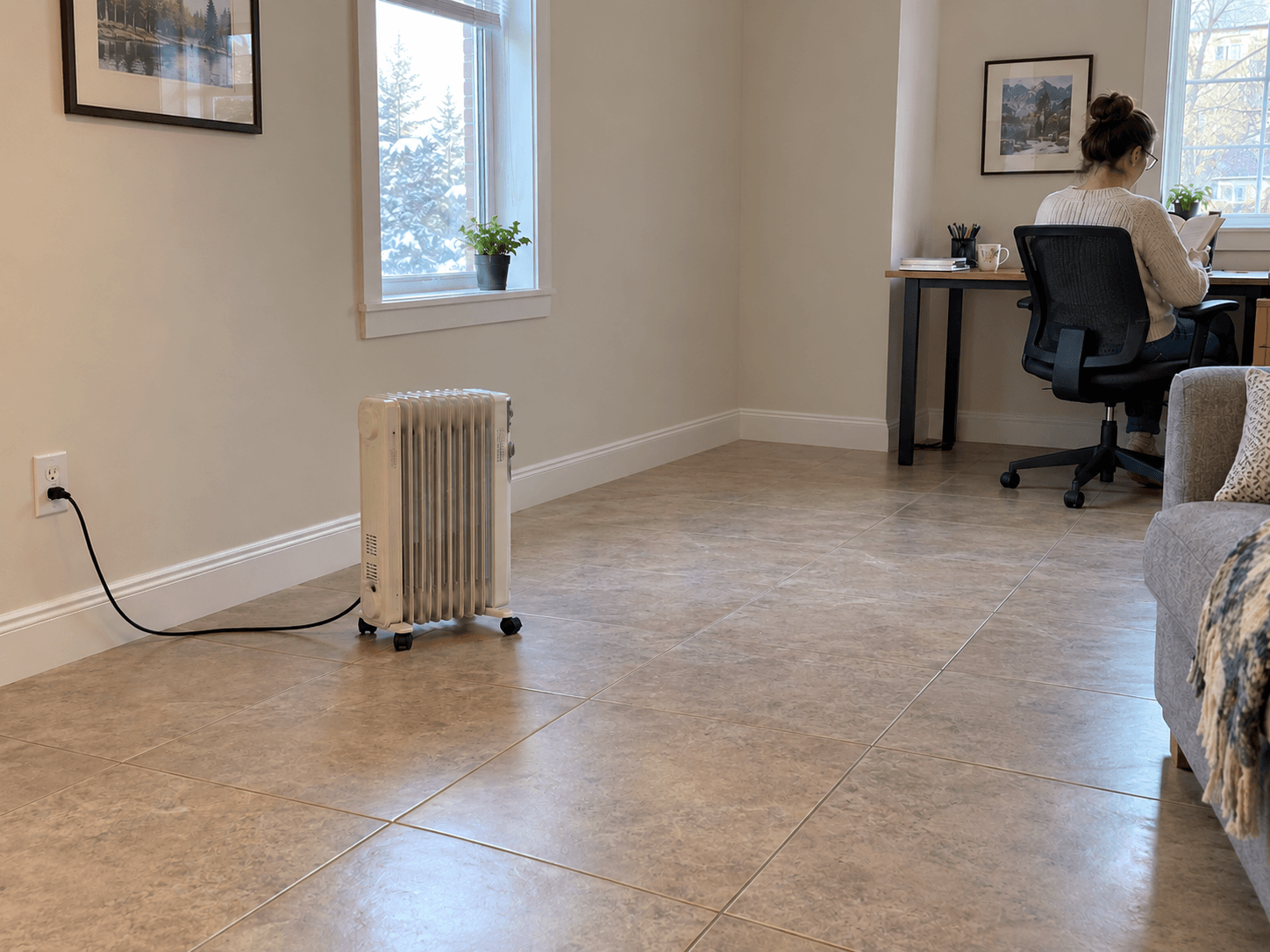
A portable heater can make a chilly room more comfortable while you are using it. The first decision is where it can stand safely, with a suitable wall outlet and a clear area around it. If the only available spot is under a blanket-covered desk, choose another spot before turning it on.
Look at the room in use
Health Canada advises keeping portable electric heaters at least one metre from combustible items such as sofas, bedding, clothing and curtains. Follow the heater's own instructions if they call for more space. Put it upright on the stable, level surface specified by the manufacturer, away from water.
Check moving objects as well as furniture. The office chair rolls backward. The curtain moves when the window opens. A child leaves a school bag beside the desk. A good location stays clear during ordinary activity and keeps the heater out of the walking route.
Choose a product carrying a recognized Canadian electrical approval mark, such as CSA, cUL or cETL. Read its instructions before use. A tip-over switch or overheat protection is useful, but neither makes it acceptable to cover the heater or leave it operating unattended.
Keep the connection simple
Source: Electrical Safety Authority: indoor and space-heater safety
Plug the heater directly into a suitable wall outlet. Health Canada and Ontario's Electrical Safety Authority advise against extension cords and power bars for this use. Do not add an adaptor, smart plug or timer unless the heater manufacturer explicitly permits that arrangement and the equipment is suitable.
Before use, inspect the unplugged cord and plug for damage. Keep the cord visible and away from hot surfaces, rugs and pinch points. If the plug fits loosely, the receptacle is damaged, or you notice scorching, unusual heat or an electrical smell, stop using that outlet and heater and have them assessed. Do not repeatedly reset a tripping breaker.
Build the stop into your routine
Switch the heater off when leaving the room. Health Canada says to unplug it before leaving home or going to sleep. Let it cool before moving or storing it, following the manual. Keep children and pets from touching the hot surface or pulling the cord.
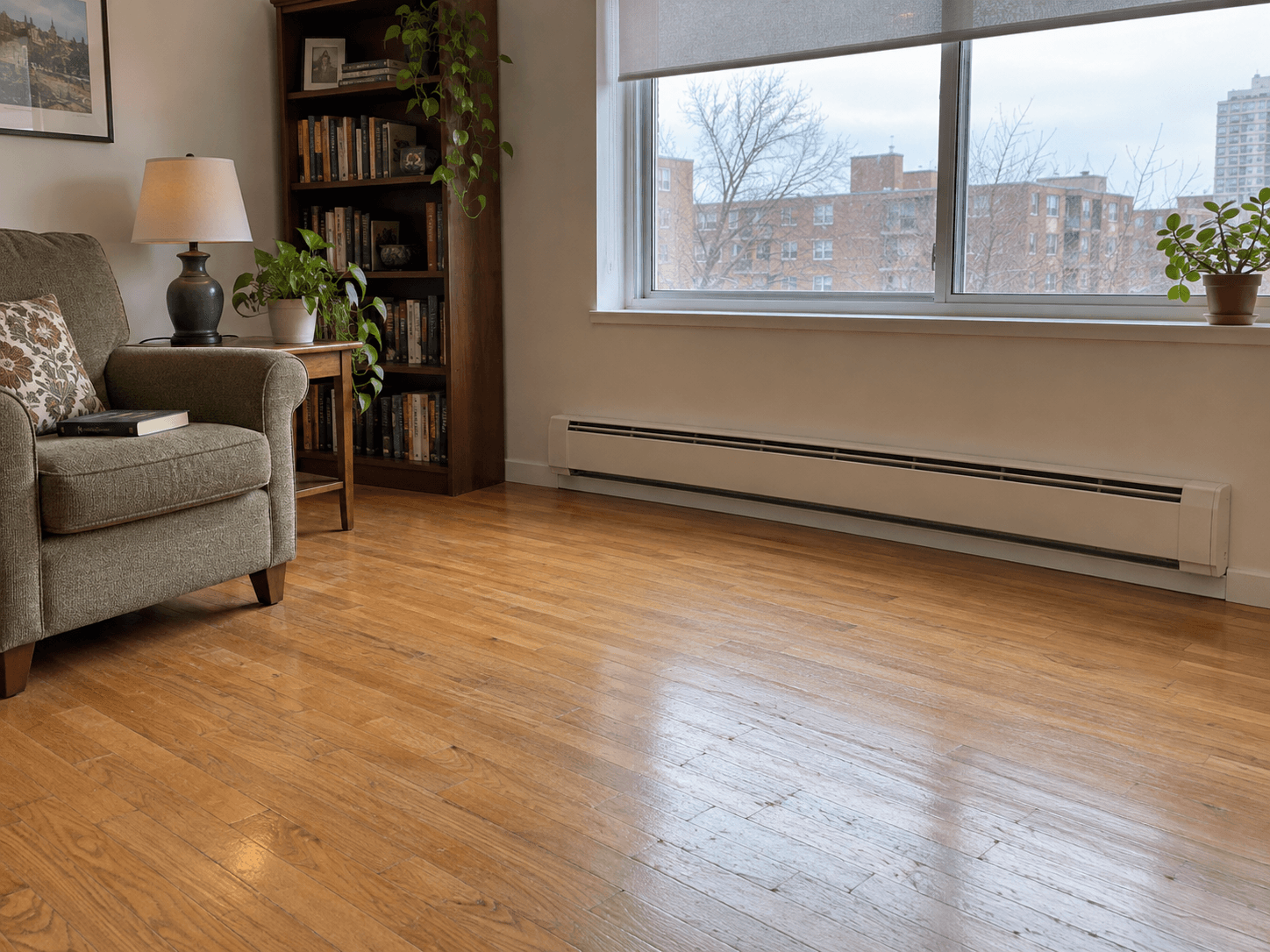
For a home office, make shutdown part of closing the laptop. For an evening reading chair, do it before heading upstairs. Avoid relying on memory after you have already left the room.
If a room needs portable heat every day, investigate why the main heating arrangement is falling short. A blocked baseboard, a poor schedule or a persistent draft may have a more useful remedy. Portable heat should fit a safe occupied-room routine; it should not become a reason to leave a heating fault unresolved.