A cover can tidy a room and keep the radiator from becoming the most prominent piece of furniture. Before ordering one, look past the paint colour. The radiator still needs to transfer heat, its control needs a useful reading and its fittings need to remain accessible.
Look for an air path, not just a decorative grille
Source: NRCan: Heating with Gas, keeping heat emitters unobstructed
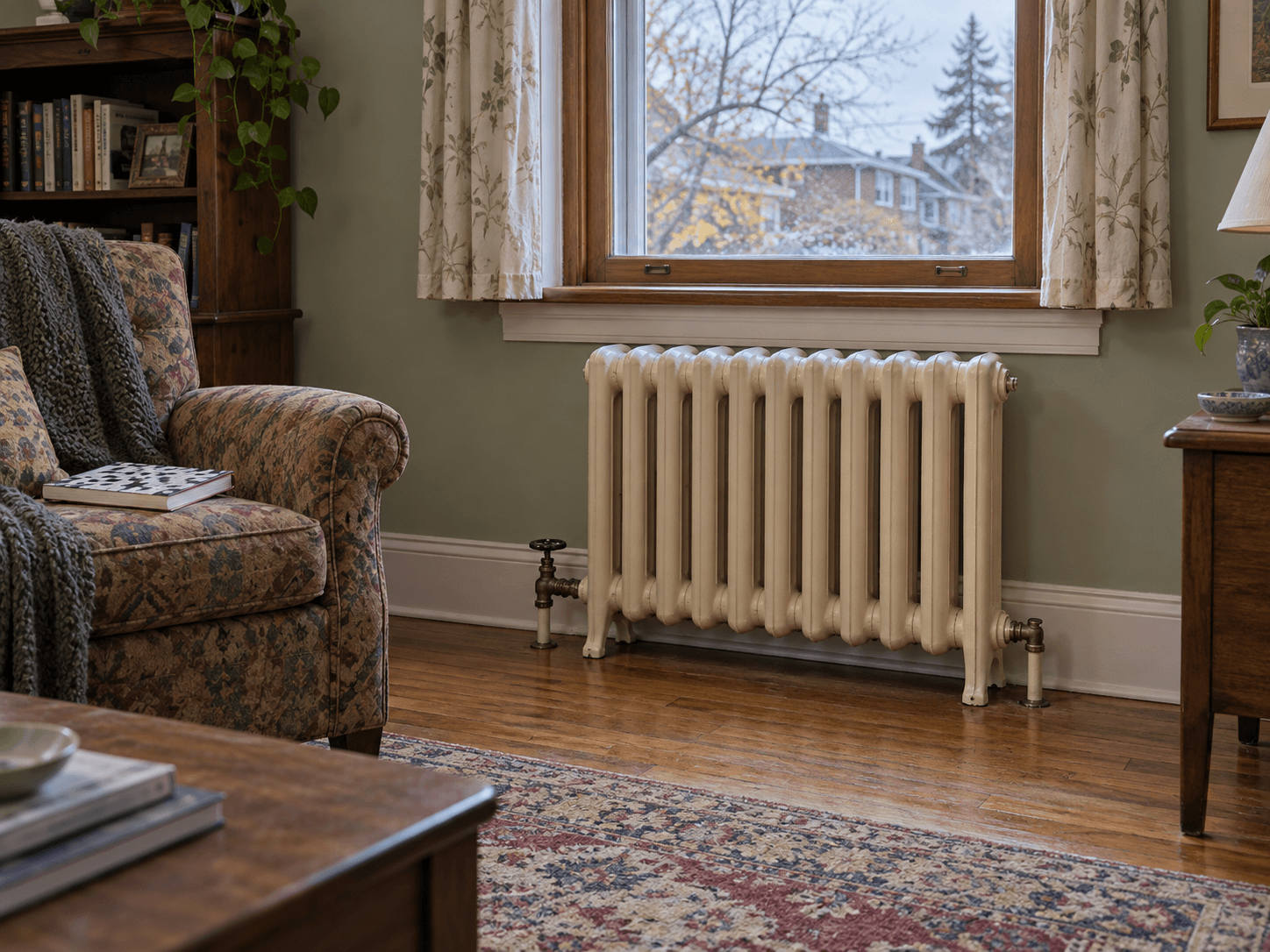
A hot-water radiator releases heat by radiation and by warming air around it. Enclosing it changes those paths. A solid box with a token opening is a different proposition from an enclosure designed for that emitter.
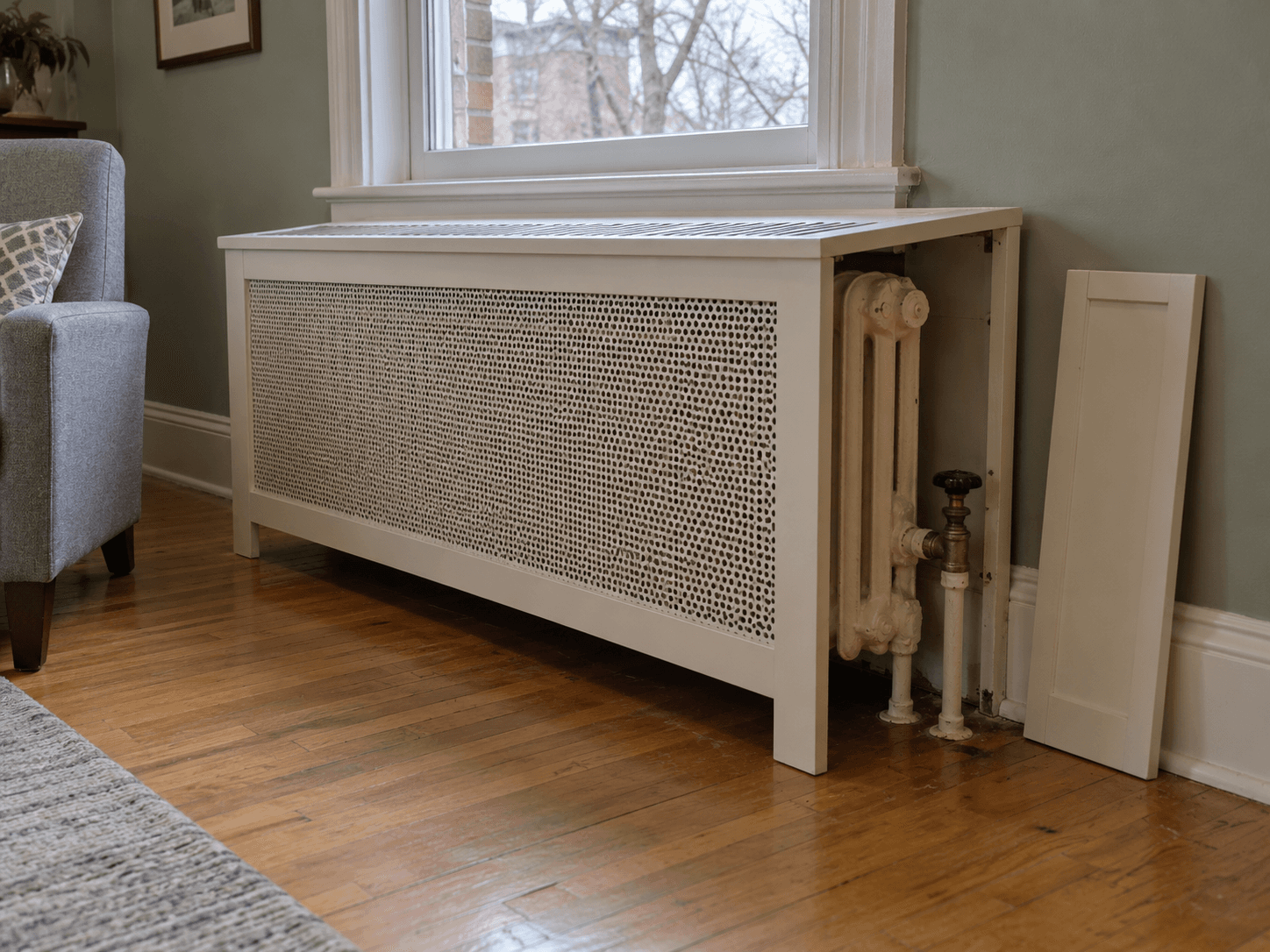
Ask the cover supplier how room air enters low down and how warmed air escapes. Check the internal dimensions against the whole radiator, including projecting valves and pipework. A measurement taken across the front alone can miss the parts that make the cover impossible to fit or remove.
Avoid a universal claim that a cover loses a fixed percentage of heat. Its construction, openings, position and the radiator itself matter. Ask for relevant performance information, especially if the room already struggles on cold days.
This advice concerns hydronic radiators. Electric heaters and other appliances have their own required clearances and enclosure restrictions. Identify the heater first; a cover sold for a water radiator is not permission to box in an electric baseboard.
Do not hide the temperature sensor inside the box
Source: Caleffi: thermostatic radiator valve sensing and zoning
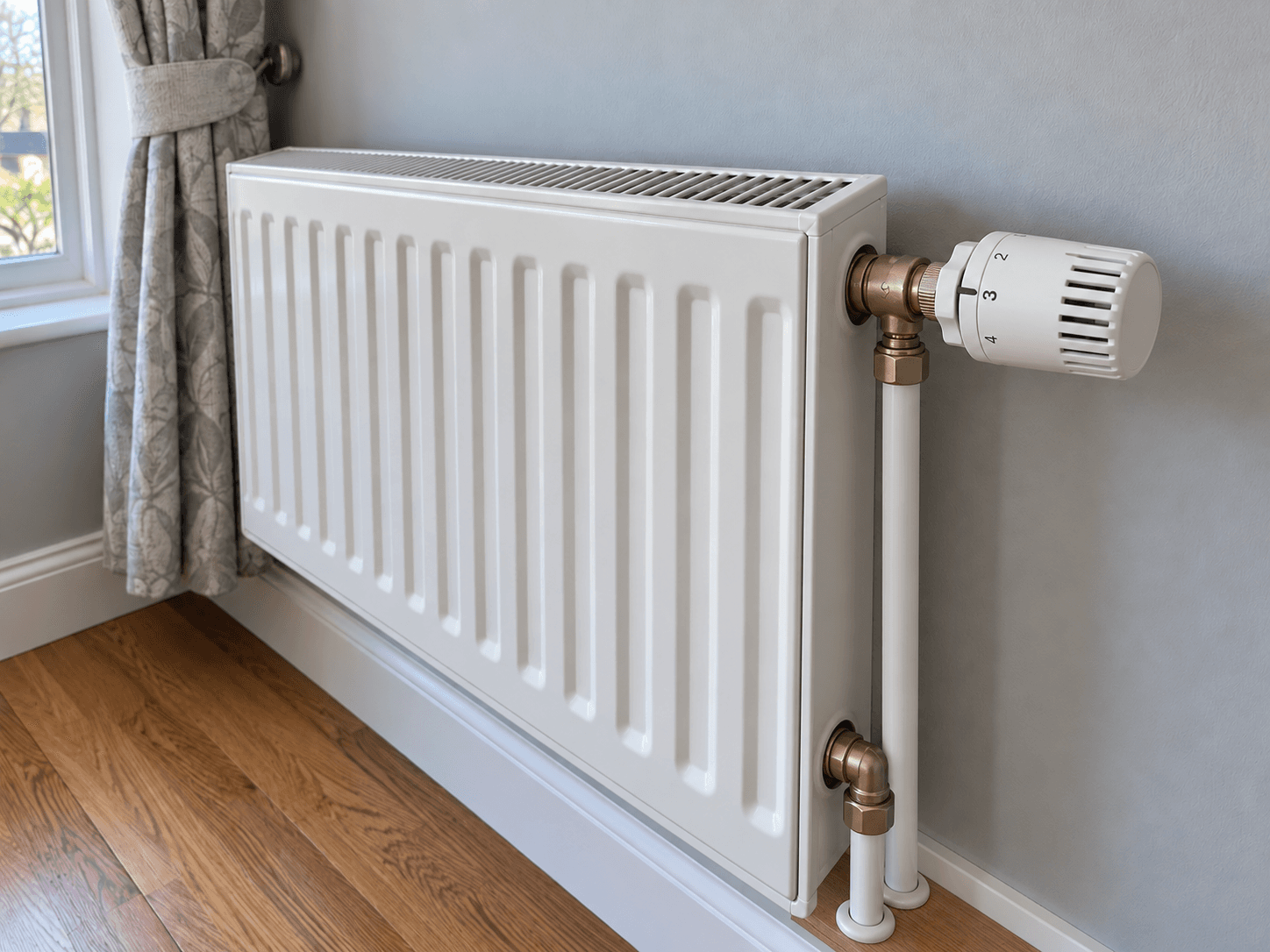
A thermostatic radiator valve responds to the temperature near its sensor. If a cover traps warm air around the head, the valve can reduce flow while the occupied part of the room remains cooler. A curtain draped over the control can cause a similar mismatch.
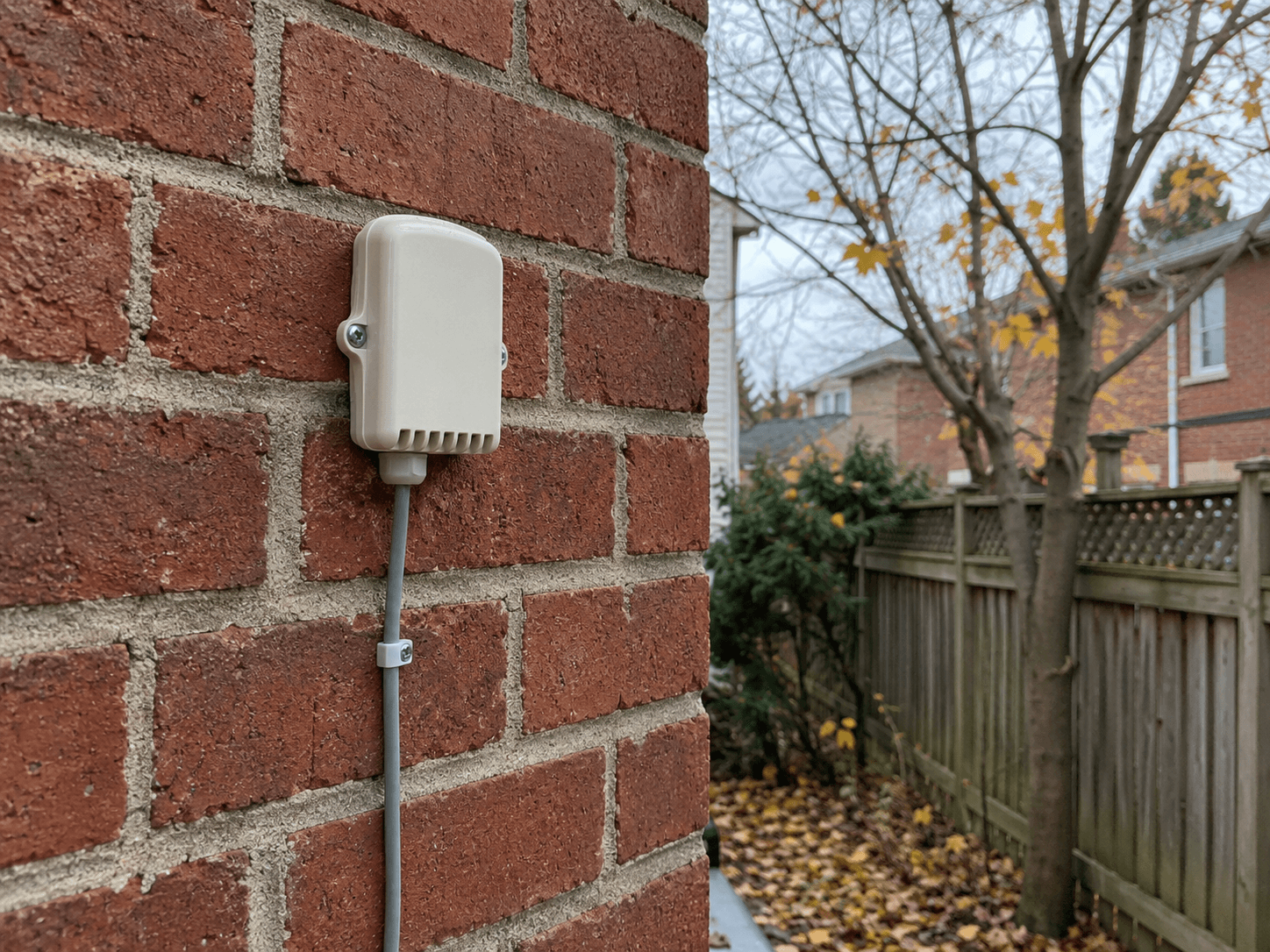
Discuss the enclosure with the heating contractor before purchase. Depending on the valve and layout, an appropriate remote sensor or a different cover design may be needed. Moving the head or changing the valve body is not a furniture assembly task.
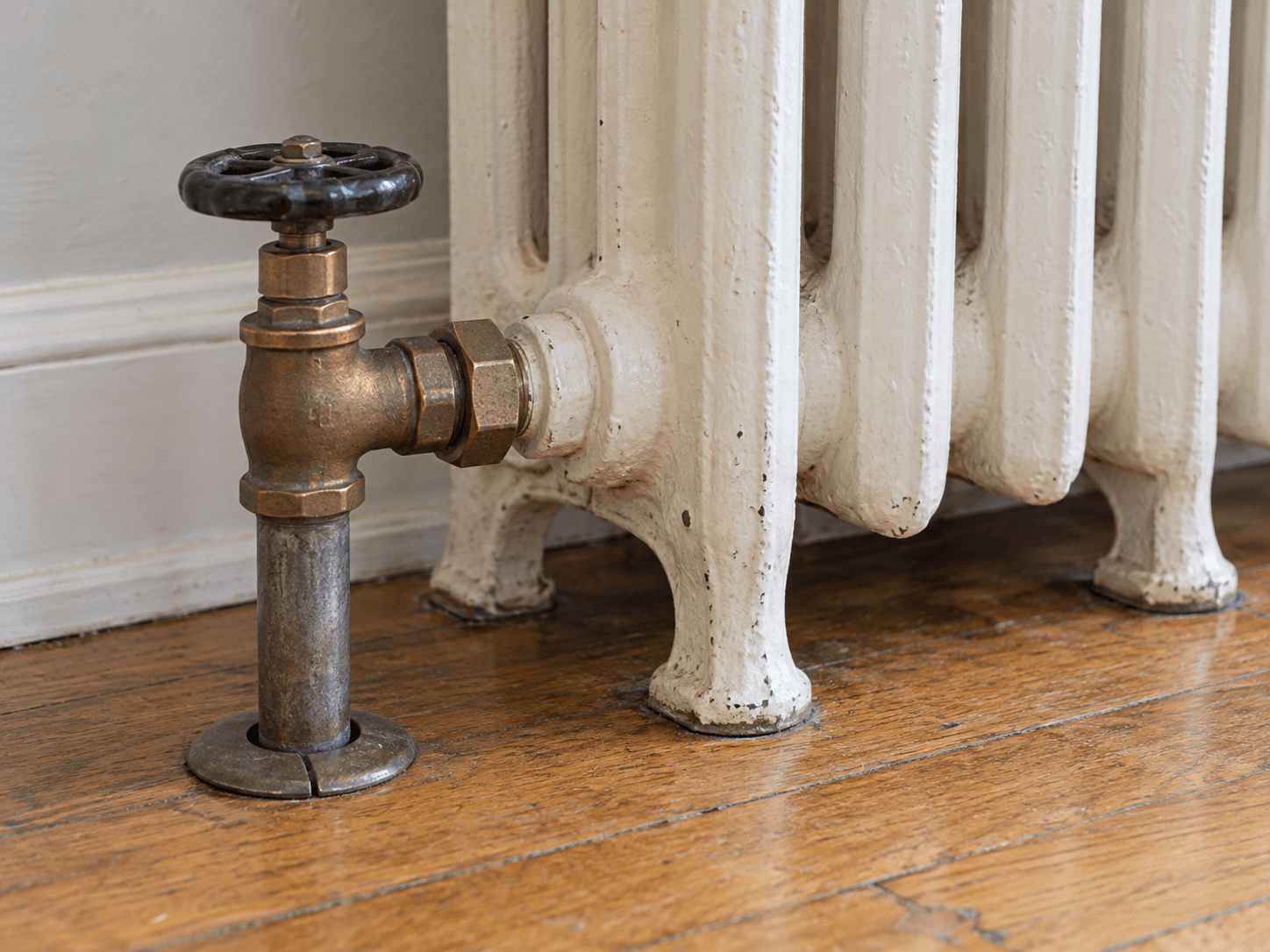
Plan for cleaning and ordinary use
- Keep the specified air openings clear of rugs, books and stored items.
- Confirm how the cover is secured, removed and reinstalled without straining pipes.
- Leave access to the valve and any owner-serviceable vent identified by the equipment instructions.
- Use materials and finishes suitable for the heater's operating conditions and the cover manufacturer's requirements.
After installation, compare room comfort under similar conditions before changing the thermostat to compensate. Note whether the valve is accessible and the cover rattles or shifts. If the room is newly cold, take the cover's construction and placement into the service conversation.
A good purchase leaves the room easier to live in without making routine heating care a dismantling project. That is worth checking before choosing the shade of white.