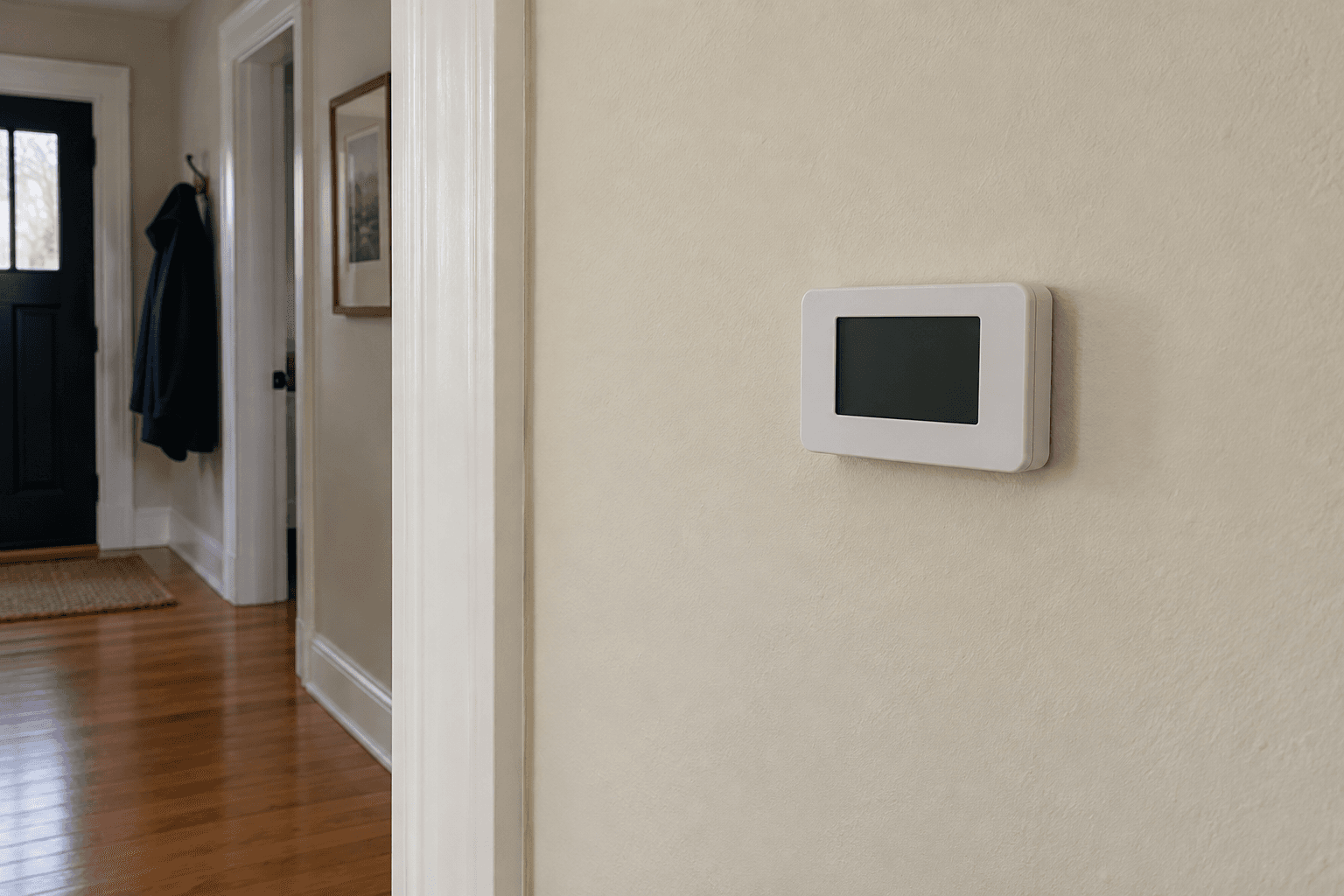
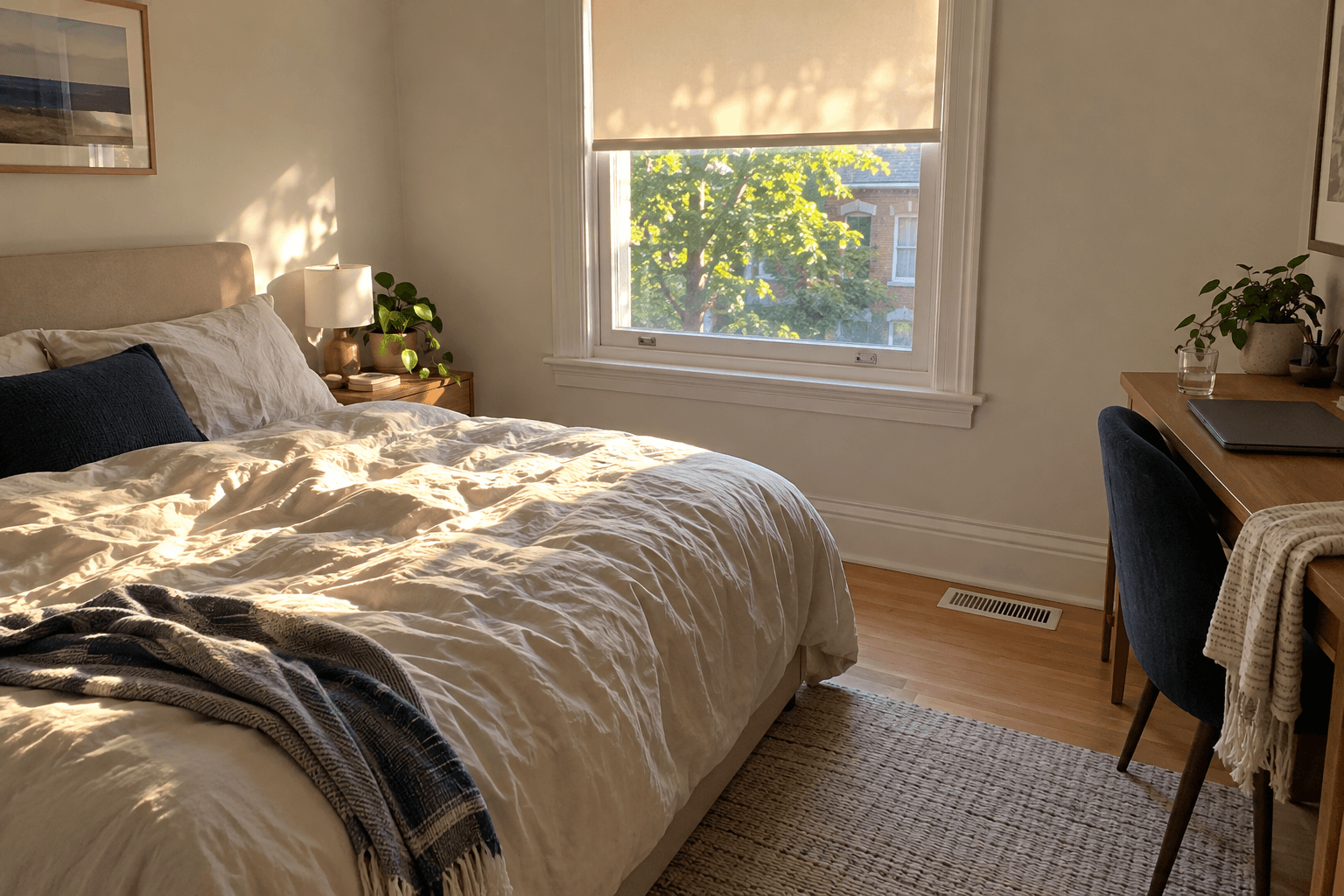
I put the new room sensor on the most convenient shelf. It was beside a reading lamp and above the spot where the afternoon sun reached the wall. The app paired it successfully, which I briefly confused with placing it successfully.
The first evening's reading made me check the installation guide again. Pairing was only the beginning.
Choose a spot that represents occupied space
Source: ecobee: SmartSensor placement
The ecobee placement guidance describes avoiding local influences such as direct sun and heating or cooling sources. Exact height, orientation and occupancy-detection requirements depend on the sensor.
I moved ours according to the instructions, away from the lamp and the supply-air stream. It still needed to be secure and practical in a room where books, bags and furniture move around.
I let it settle before comparing readings. Carrying a sensor from shelf to shelf and expecting an instant verdict would tell me little about the room.
Check the reading before using it
For a few normal periods, we looked at the sensor's temperature alongside the room's use and conditions. We also confirmed which room name appeared in the app. Two identical devices are surprisingly easy to swap while unpacking.
Only then did we decide when the thermostat should use that sensor. A well-placed device that never participates in the active comfort setting may not influence control at all.
Conversely, making the coldest room the only participating sensor can make other rooms warmer while the system tries to satisfy it. A sensor reports conditions; it does not repair a duct or create an independent zone.
The lamp stayed where it was useful for reading. The sensor found a different place, and its room label now matches the room it actually occupies. Those small checks made the later scheduling choices much easier to understand.