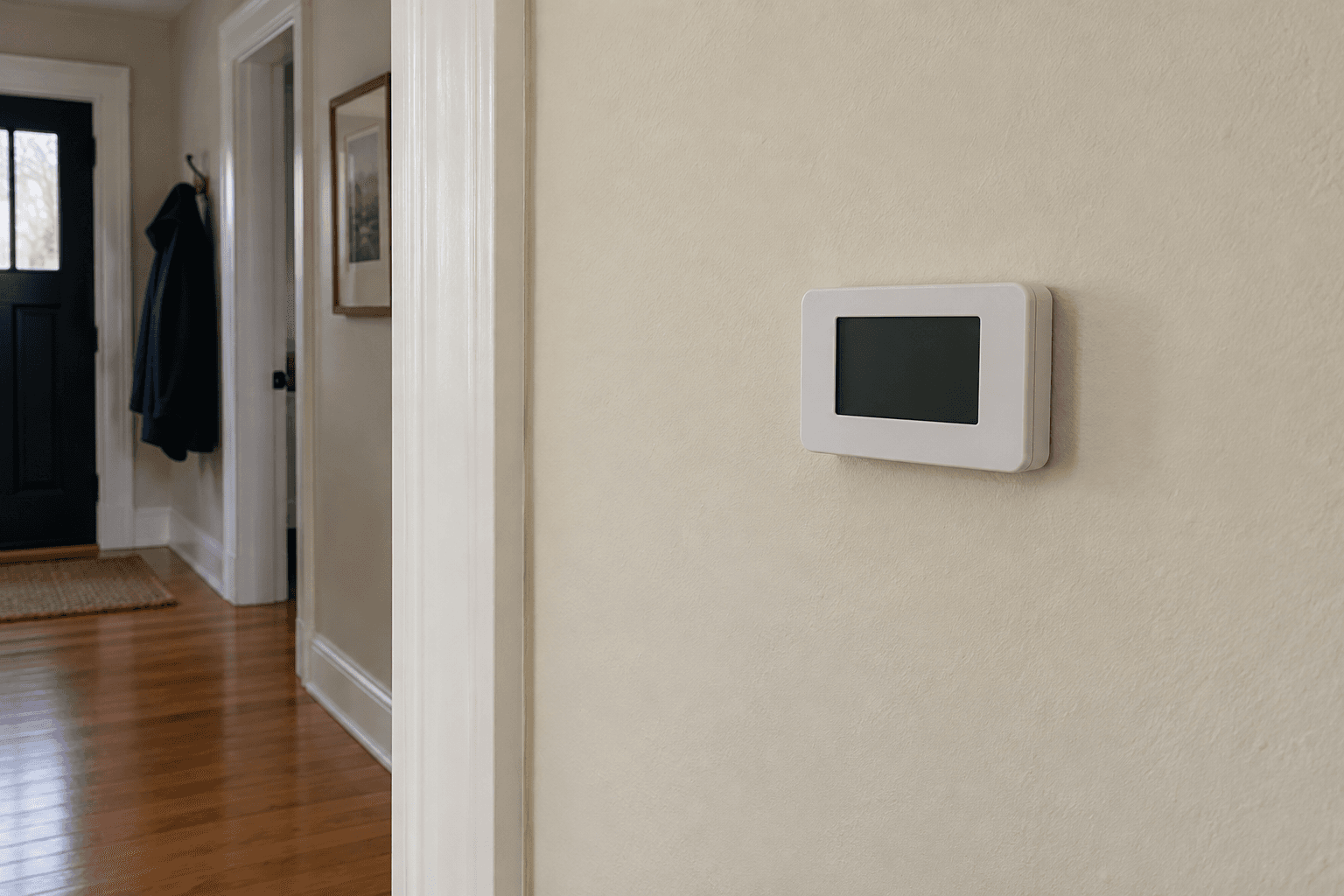
On bright afternoons the heating seemed to stop early, even while the sofa area felt cool. A narrow patch of sun crossed the hallway at almost the same time. It landed directly on the thermostat.
I had been increasing the setpoint to compensate, then reducing it again after sunset. Before making another schedule, I recorded the timing of the sun and the displayed temperature.
The control needs a useful reading
Vermont Energy Saver's thermostat guidance recommends a location away from direct sun, drafts and other local influences, generally on an interior wall. The aim is a reading that represents the space the system is controlling.
A sunlit thermostat can be warm while other parts of the house are not. Nearby lamps, electronics and supply air can also complicate a reading. A replacement thermostat in the same unsuitable place may inherit the same problem.
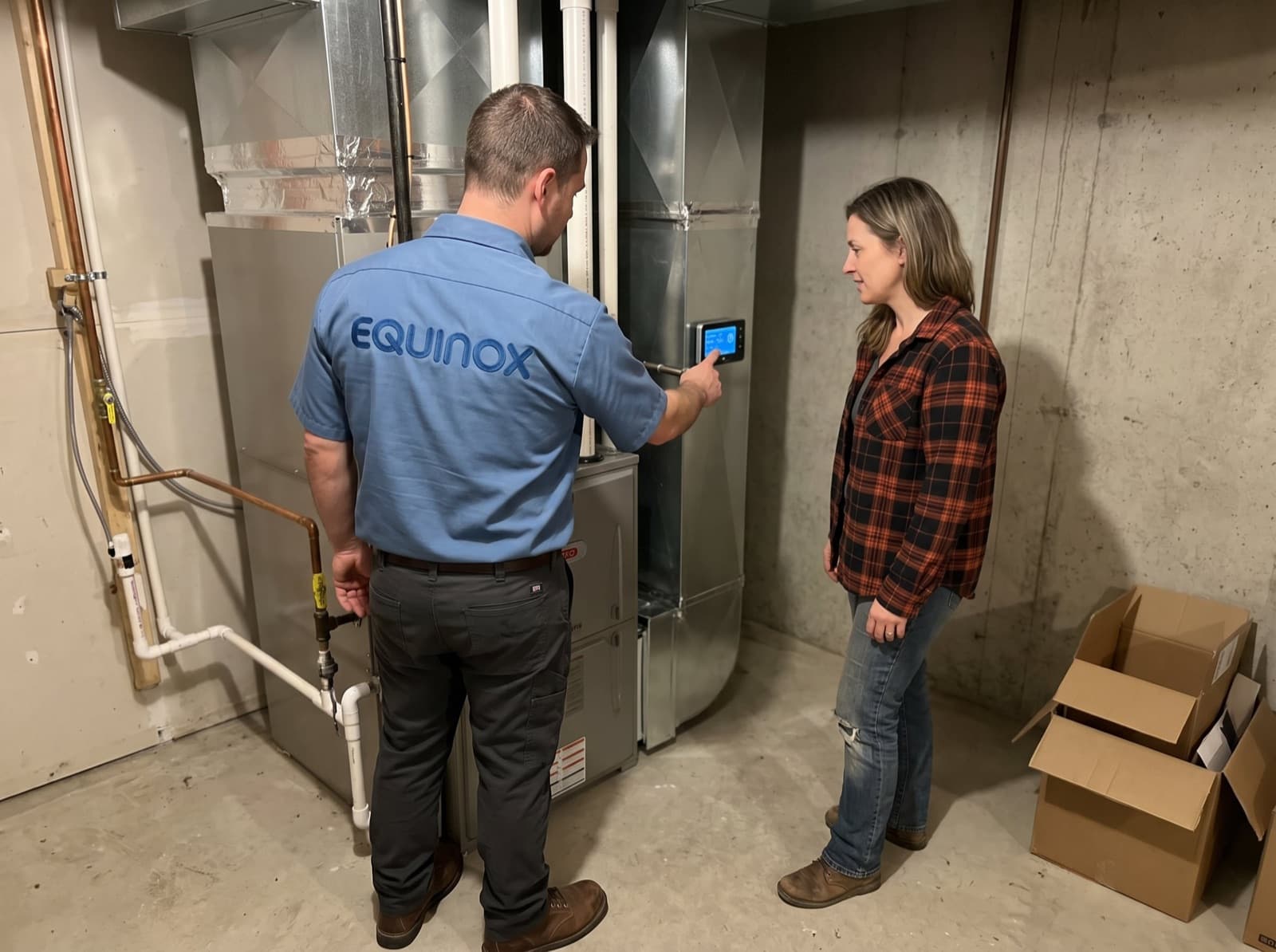
I checked our model's placement instructions and made a note for the HVAC contractor. I didn't relocate wiring or cover the thermostat with a box to shade it; blocking its airflow would introduce another influence.
Look for a repeatable pattern
I compared a bright day with an overcast one, noting the room conditions and system mode. We used the normal window shade without obstructing the control. That helped us describe the pattern, though it was not a laboratory test.
The contractor could then consider relocation or a supported remote-sensor arrangement. If a sensor was proposed, we wanted its placement and participation explained too.
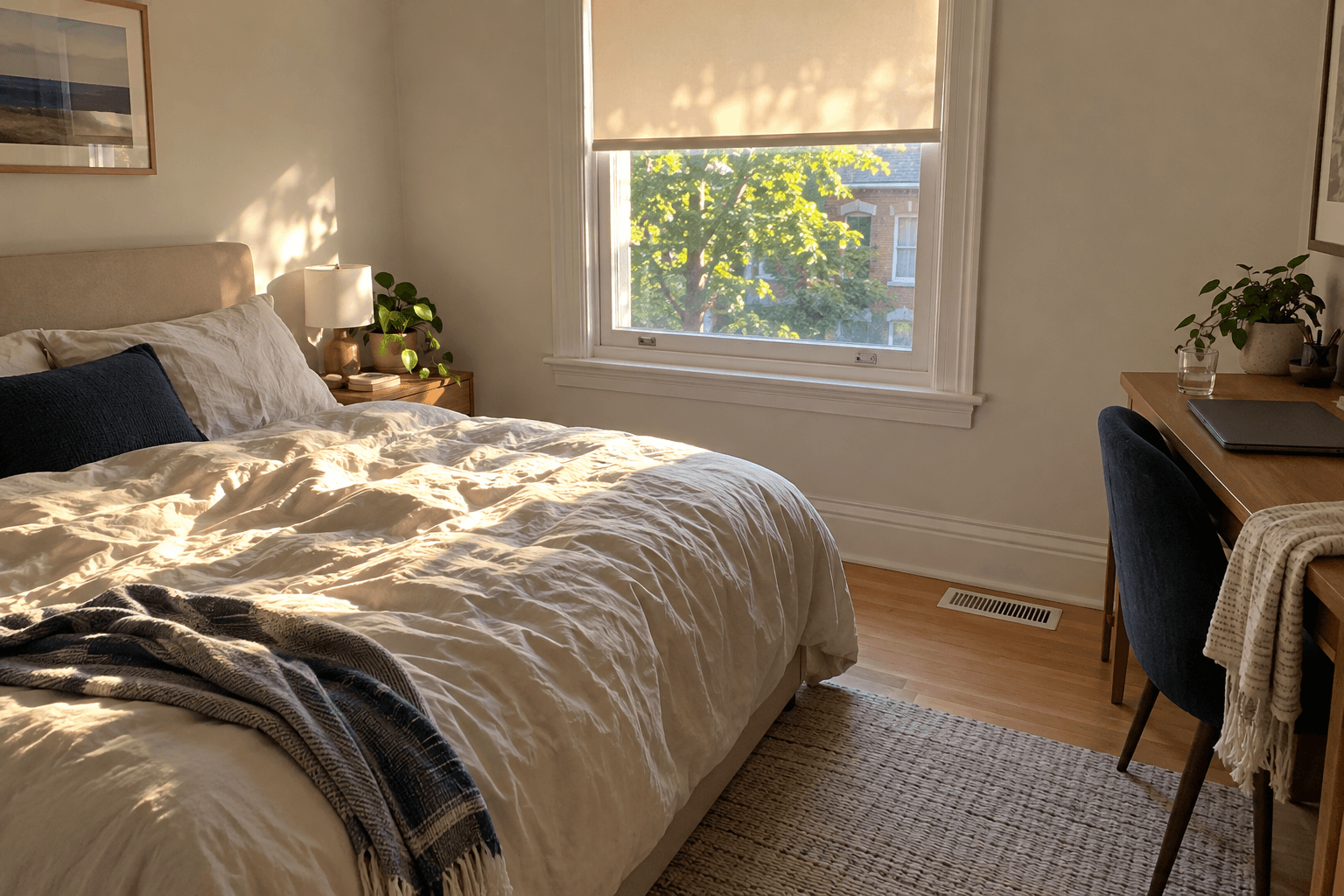
We also checked whether the sunny room itself needed shading. A thermostat correction cannot remove actual solar heat elsewhere in the house.
My notes made the distinction easier to explain: the control was in the sun, the sofa was not, and the daily adjustment happened when that difference appeared.